
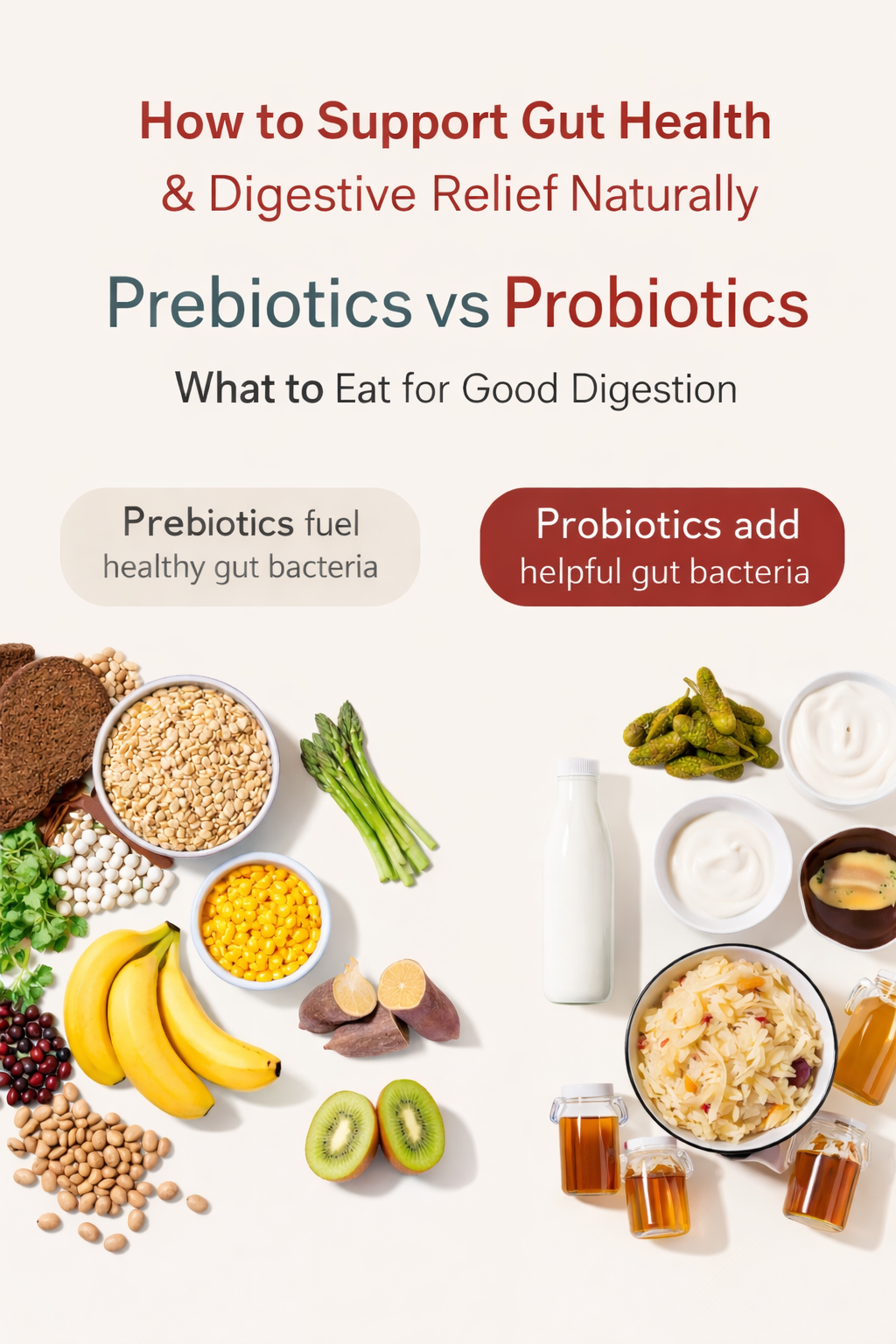
If bloating, irregular digestion, or food sensitivity symptoms keep showing up, your gut may be asking for support—not restriction.
One of the most effective (and overlooked) ways to support digestive relief is improving the balance of prebiotics and probiotics in your everyday meals. These work together to support gut bacteria, digestion, and overall comfort—without extreme diets or supplement overload.
Let’s break it down simply.
Probiotics: The “Helpful Bacteria” Your Gut Needs
Probiotics are live microorganisms that help maintain a healthy gut environment. They support digestion, immune function, and gut barrier health.
You don’t need dozens of supplements to get them. Many probiotic foods are already familiar and easy to include.
Probiotic-Rich Foods to Include
Yogurt
Kefir
Pickles (naturally fermented, not vinegar-only)
Sauerkraut
Miso
Kombucha
These foods introduce beneficial bacteria that help restore balance in the gut—especially helpful if you’ve experienced antibiotics, stress, travel, or digestive disruption.
Relief tip: Start with small amounts. More is not always better, especially if bloating is already present.
Prebiotics: The Fuel That Keeps Gut Bacteria Working
If probiotics are the workers, prebiotics are their fuel.
Prebiotics are fibers found in plant foods that feed beneficial gut bacteria, helping them thrive and do their job effectively.
Prebiotic-Rich Foods to Include
Whole grains (oatmeal, whole-grain bread, whole-grain pasta)
Vegetables (asparagus, leeks, onions)
Starchy vegetables (sweet potatoes, corn)
Fruit (bananas, kiwi, apples)
Legumes (beans, lentils, peas)
These foods support regularity, stool quality, and long-term gut health—but timing and portions matter.
Relief tip: If fiber causes discomfort, spacing intake throughout the day can be gentler than large portions at once.
Prebiotics vs Probiotics: You Don’t Have to Choose
One of the biggest misconceptions is that you need either prebiotics or probiotics.
In reality, they work best together.
Probiotics add beneficial bacteria
Prebiotics help those bacteria survive and function
Without enough prebiotic fiber, probiotic bacteria struggle to stick around—whether they come from food or supplements.
When “Healthy” Foods Still Cause Symptoms
If you’ve tried adding fiber or fermented foods and felt worse, that doesn’t mean your gut is broken.
It usually means:
The type, timing, or amount needs adjustment
Your gut may need a stepwise approach
Underlying sensitivities may be involved
This is where personalized guidance matters.
A Relief-First Way to Support Your Gut
Gut support should feel calming, not chaotic.
Instead of guessing:
Start low and build slowly
Pair prebiotics with protein and fat
Notice patterns—not just symptoms
And if symptoms persist, testing and individualized support can help identify what your gut actually tolerates.
Ready for More Digestive Relief?
If you want structured, symptom-aware guidance instead of trial and error:
👉 Explore the Compass Nutrition Kitchen – gentle, gut-supportive recipes designed with real digestion in mind
👉 Try our Symptom Relief Tools – identify triggers and patterns without restriction
👉 Let’s Figure This Out – personalized gut support rooted in relief, not rules. Personalized 1:1 nutrition support