
If you’ve been feeling run-down, struggling with recovery, or hearing about supplements that promise better circulation or performance, L-arginine may have crossed your radar.
But like most supplements, the question isn’t “Does it do something?”
It’s “Is this helpful for you, right now?”
Let’s break it down—simply, calmly, and without hype.
What Is L-Arginine?
L-arginine is an amino acid—one of the building blocks your body uses to make protein and repair tissue. Your body can produce some on its own, and you can also get it through food.
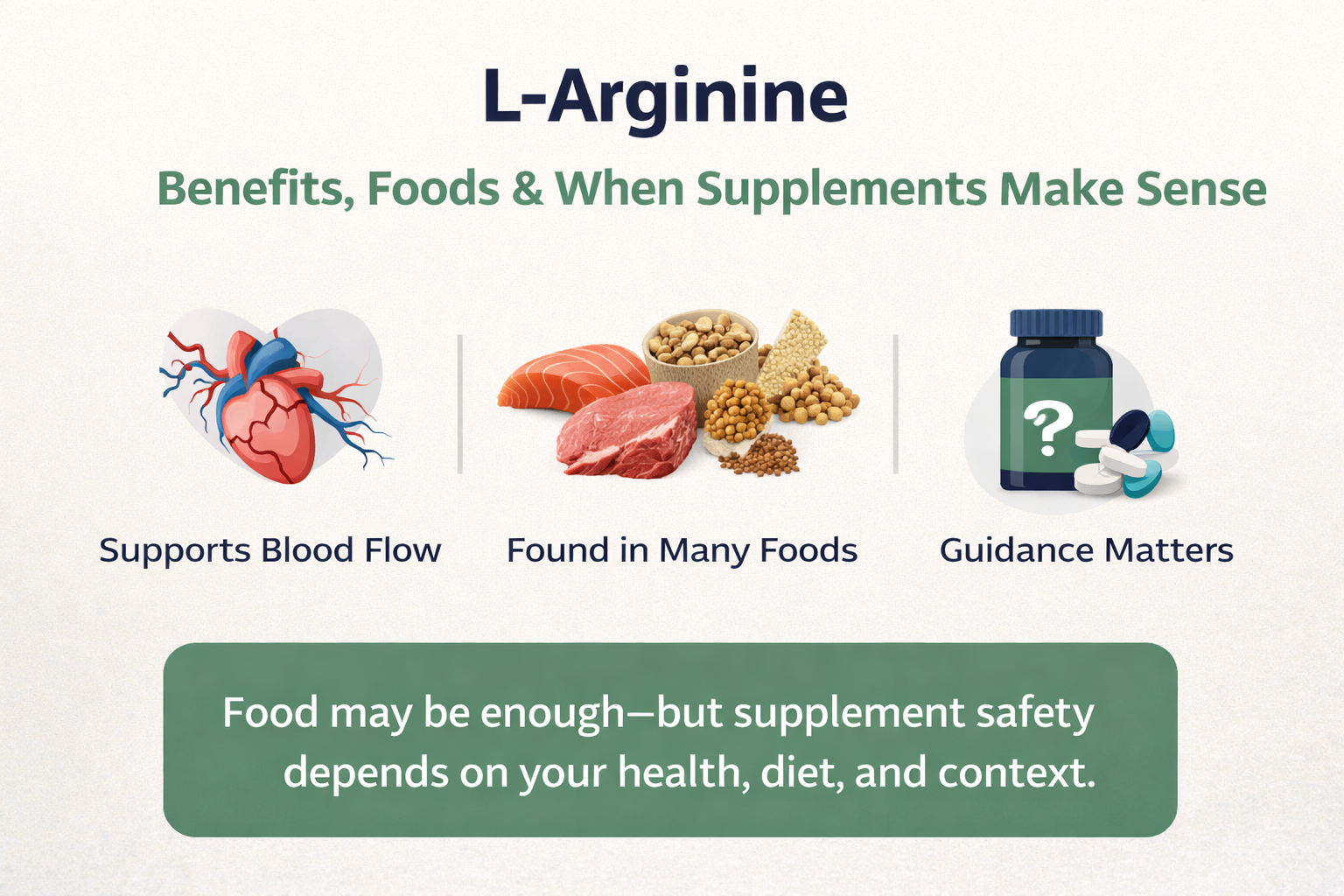
One of its key roles is helping your body make nitric oxide, a compound that relaxes blood vessels and supports blood flow.
That mechanism is why L-arginine often shows up in conversations about heart health, exercise performance, and healing.
Potential Benefits (Why It’s Sometimes Used)
L-arginine may support the body in a few important ways:
Improved blood flow
By supporting nitric oxide production, L-arginine helps blood vessels relax—supporting circulation and cardiovascular health.Muscle recovery & growth
As part of protein metabolism, it may help with muscle repair after exercise and support recovery.Wound healing & tissue repair
L-arginine plays a role in rebuilding tissue, which can be especially relevant after injury or surgery.Immune system support
It contributes to immune function, helping the body respond to stress and infection.
Helpful for some. Not universal. Context matters.
Food Sources of L-Arginine
Before jumping to supplements, it’s worth noting that L-arginine is found naturally in many foods:
Meat and poultry
Fish
Dairy products
Whole grains
Nuts and seeds
Legumes
For many people, nutrition alone can meet baseline needs—especially when intake is consistent and balanced.
When Supplements May Not Feel So Helpful
This is where relief-based nutrition really matters.
L-arginine supplements aren’t automatically beneficial—and in some cases, they may be inappropriate depending on:
Blood pressure concerns
Certain heart conditions
Medications
Digestive tolerance
Overall fueling and protein intake
That’s why this isn’t a DIY supplement. The same nutrient that helps one person feel better can leave another feeling off.
As always, it’s important to speak with a healthcare professional before starting any supplement to ensure it’s safe and appropriate for you.
The Relief-Focused Takeaway
If you’re exploring supplements because you feel tired, under-recovered, or overwhelmed by conflicting advice, that’s a signal—not a failure.
L-arginine can be a useful tool when it fits the bigger picture: nutrition, medical history, medications, and real-life stress.
Relief doesn’t come from adding more.
It comes from choosing what actually helps.
Ready for More Clarity (and Less Guesswork)?
➡️ Want support deciding whether supplements make sense for you?
Let’s Figure This Out: we can help you sort through what’s useful—and what’s unnecessary—without pressure. Personalized 1:1 nutrition support.
➡️ Looking for simple, food-first guidance?
Explore the Compass Nutrition Kitchen, where practical tools focus on fueling, balance, and feeling better—not perfection.
You don’t need more rules.
You need steadier ground.