
If you’ve ever stood in the supplement aisle wondering whether you need probiotics, prebiotics, or both — you’re not alone.
Digestive symptoms like bloating, irregular stools, gas, or discomfort often push people toward “gut health” products without clear guidance. And that’s where frustration starts.
Let’s slow this down and simplify it — so you can make choices that support relief, not more trial-and-error.
First: What Are Probiotics?
Probiotics are living microorganisms — bacteria and yeast — that already exist naturally in your gastrointestinal tract and help support digestion, immune function, and overall gut health.
You’ll find probiotics in:
Fermented foods like yogurt, kefir, sauerkraut, kimchi, tempeh, and kombucha
Foods fortified with probiotics
Dietary supplements
Important relief note:
Because probiotics are living, they can be vulnerable to heat, stomach acid, and time. This means not every probiotic supplement works the way it claims — and not every gut needs the same strains.
👉 More is not always better.
Now: What Are Prebiotics?
Prebiotics are non-living compounds — mostly non-digestible carbohydrates — that act as food for your beneficial gut bacteria.
They help nourish and support the bacteria already living in your gut.
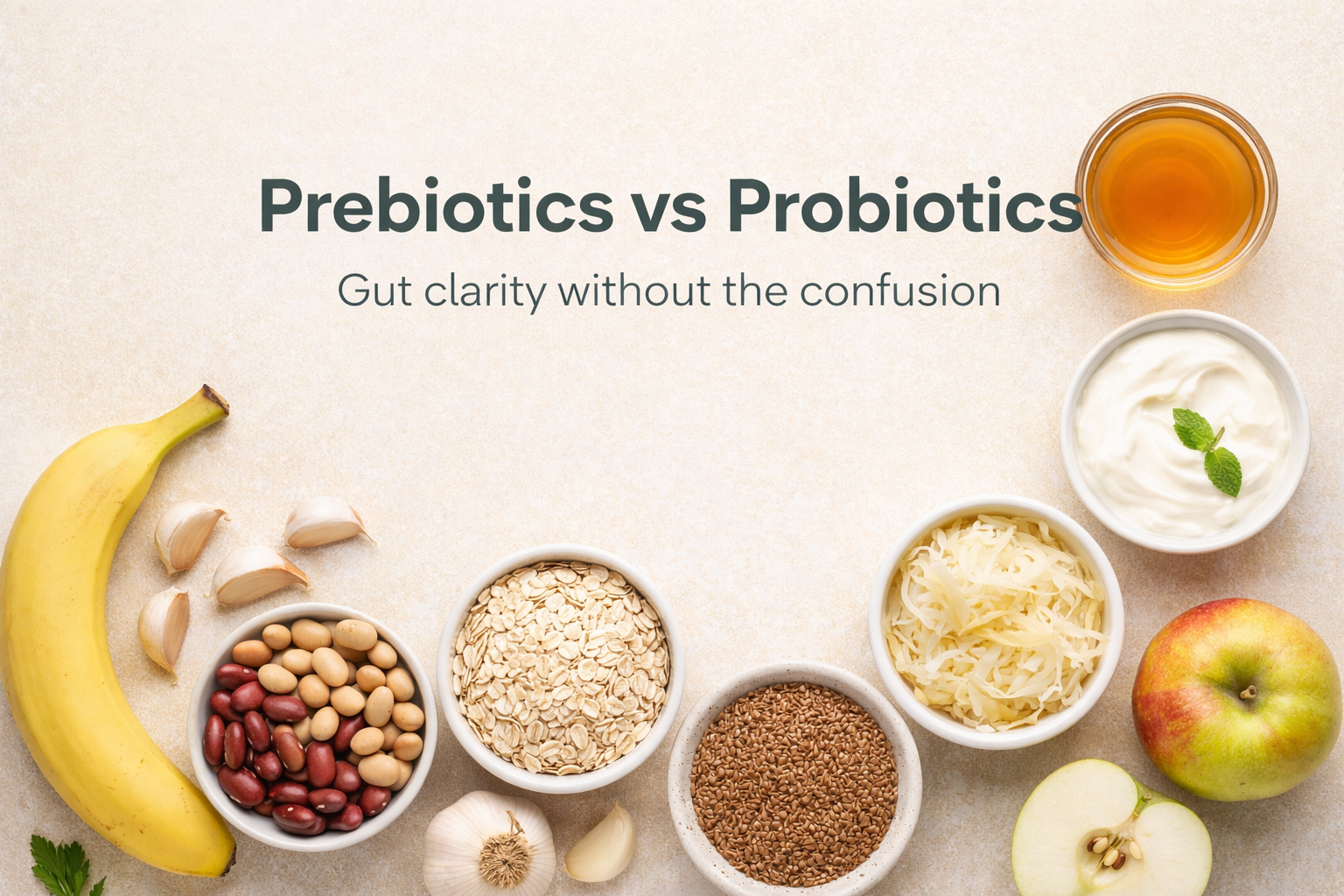
You’ll find prebiotics naturally in foods like:
Beans
Asparagus
Garlic
Onions & leeks
Bananas
Oats
Apples
Flax
Why this matters for relief:
Unlike probiotics, prebiotics are stable. They aren’t damaged by stomach acid, heat, or time — which means food-first strategies can be powerful and gentler.
So… Which One Do You Actually Need?
This is where most people get stuck — and where relief gets delayed.
You might benefit more from prebiotics if:
You’re dealing with bloating or gas after starting probiotics
You tolerate fiber-rich foods well
Your gut feels “sensitive” to supplements
You might benefit from probiotics if:
You’ve recently taken antibiotics
You have specific digestive or immune concerns
You’re using targeted strains, not random blends
And sometimes — the order matters.
For many people, supporting the gut environment first (with food, prebiotics, and consistency) creates a better foundation before adding probiotics.
Relief isn’t about doing everything at once.
It’s about doing the right thing at the right time.
Common Gut Health Mistake (That Delays Relief)
Taking a probiotic without addressing fuel, tolerance, or symptoms first.
This can lead to:
Increased bloating
More gas
“Why does my gut feel worse?” confusion
Gut support should feel supportive, not stressful.
A Relief-Focused Way to Start
If your goal is to:
Calm digestion
Reduce bloating
Support your gut without overwhelm
Start with:
Food-based prebiotics you tolerate well
Simple, consistent meals
Targeted supplementation only when appropriate
No guessing. No stacking five products at once.
Want Clear Guidance Instead of Guessing?
Struggling with bloating, food reactions, or digestive symptoms?
A single nutrition session can help identify whether probiotics, prebiotics, or neither is the right starting point for your gut.
👉 Let’s Figure This Out. Personalized 1:1 nutrition support
Prefer a self-guided option?
Explore Compass Nutrition Kitchen — simple, gut-supportive food strategies designed to reduce symptoms, not add restriction.
Still unsure where to start?
You don’t need another supplement — you need clarity.
Bottom Line
Gut health isn’t about choosing sides between probiotics and prebiotics.
It’s about understanding what your gut needs right now — and building toward relief step by step.
Less noise.
More clarity.
Better digestion.