
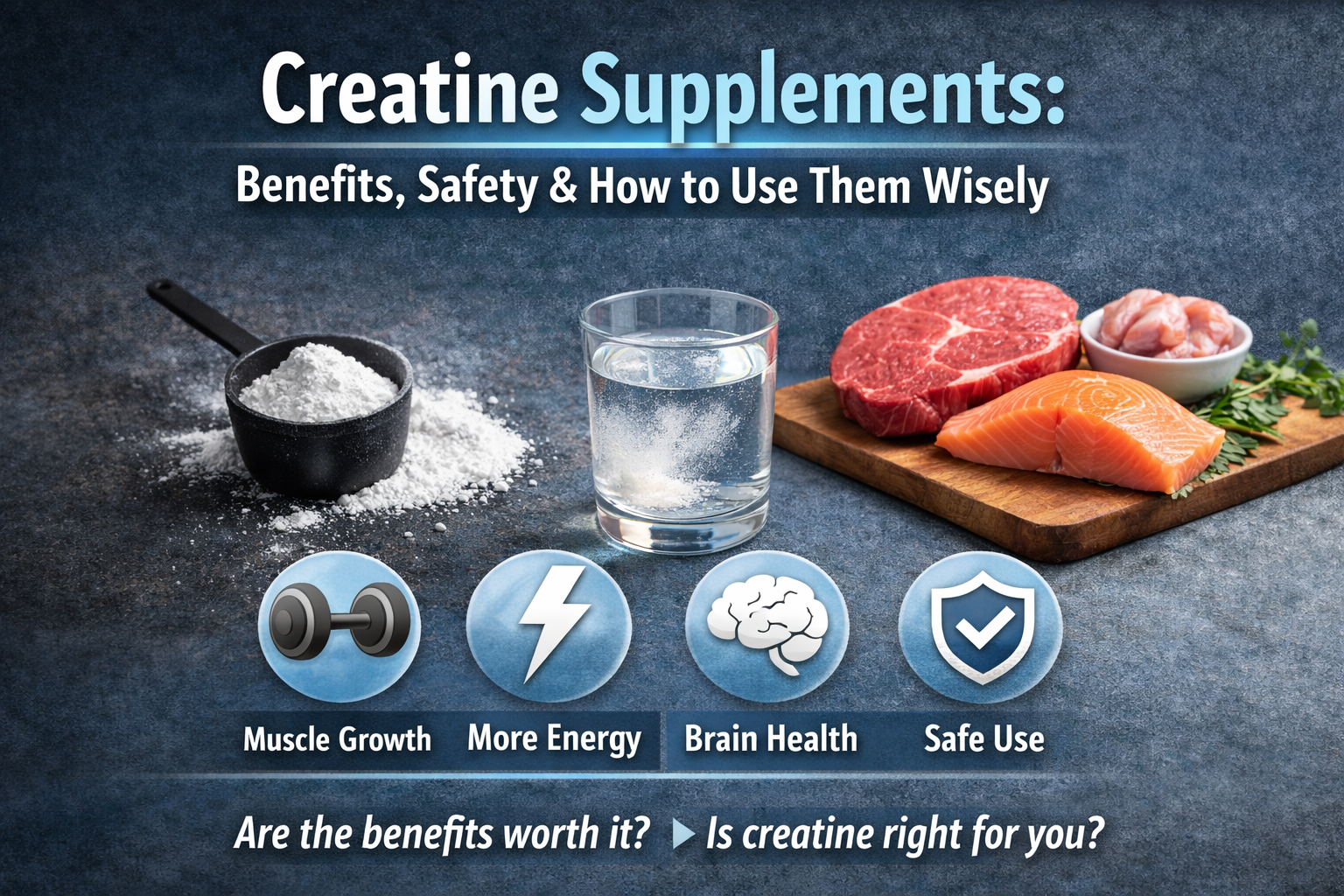
Creatine is one of the most researched supplements available—but it’s also one of the most misunderstood.
Often associated with bodybuilding, creatine actually plays a broader role in energy production, muscle function, and even brain health. Whether you’re exercising regularly, trying to preserve muscle, or simply curious about whether creatine is right for you, here’s what you need to know.
What Is Creatine?
Creatine is a naturally occurring compound found in small amounts in foods like beef, pork, and fish. Your body also produces it on its own. It plays a key role in creating phosphocreatine, a rapid energy source used during short bursts of high-intensity activity like lifting, sprinting, or jumping.
Key Benefits of Creatine
1. Improved Exercise Performance
Creatine helps replenish quick energy stores, supporting strength, power, and performance during intense activity.
2. Muscle Support & Growth
It can increase water content within muscle cells and stimulate protein synthesis—both of which support muscle growth and recovery.
3. Cognitive & Brain Health Support
Emerging research suggests creatine may support memory and mental clarity, especially during periods of mental fatigue.
4. Potential Medical Applications
Creatine has been studied for its potential role in muscle-wasting conditions and certain neurological disorders, though this area is still evolving.
Food Sources vs. Supplements
Food sources of creatine include:
Beef
Pork
Fish
For example, a 3.5-ounce serving of cooked beef provides roughly 2 grams of creatine.
Supplemental creatine, such as creatine monohydrate, can be a more convenient and consistent way to increase intake—especially for those who don’t consume much animal protein or have higher needs.
Creatine Supplementation: What to Know
A common dosing strategy includes:
Loading phase: ~20 grams per day (split into 4 doses) for 5–7 days
Maintenance phase: 3–5 grams per day thereafter
That said—loading is not required for everyone, and lower daily dosing may be appropriate depending on your goals, digestion, and overall nutrition.
Safety, Side Effects & Hydration
Creatine is generally considered safe for healthy adults. Possible side effects may include:
Digestive discomfort
Temporary weight gain due to water retention
Staying well-hydrated is important when supplementing, and creatine should always be discussed with a healthcare professional—especially if you have medical conditions or take medications.
The Bottom Line
Creatine isn’t just for athletes—and it isn’t a one-size-fits-all supplement.
When used appropriately, it can support strength, muscle preservation, performance, and possibly brain health. But dosing, timing, hydration, and your overall nutrition pattern matter.
Ready to Use Supplements Smarter?
Not sure if creatine fits your goals, medications, or training routine?
👉 Let’s Figure This Out Personalized 1:1 nutrition support
Want a clear, dietitian-approved framework for supplements that actually support energy, muscle, and metabolism?
👉 Explore The Compass Nutrition Kitchen for practical guides that help you fuel smarter—without over-supplementing.