
Reviewed by Adiana Castro, MS, RDN, CDN, LDN, CLT
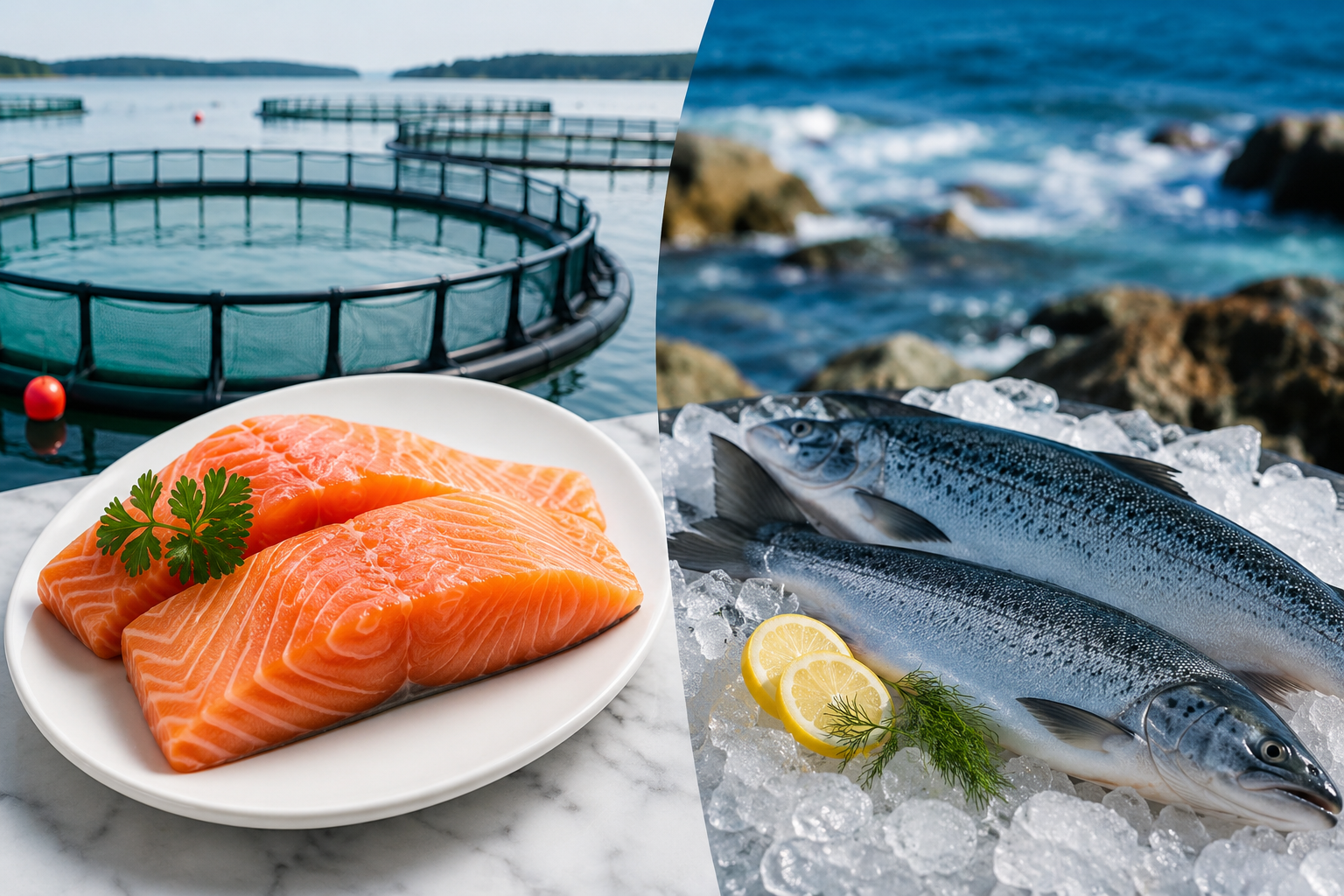
If you've ever stood at the seafood counter wondering whether farm-raised or wild-caught fish is healthier, you're not alone. The good news is that both are nutritious choices and can be part of a healthy eating pattern.
For most people, the best choice comes down to your budget, taste preferences, availability, and the type of fish you enjoy eating—not whether it's farm-raised or wild-caught.
Quick Answer
Both farm-raised and wild-caught fish are healthy options.
The biggest differences are:
✅ Both provide high-quality protein.
✅ Both provide important omega-3 fatty acids.
✅ Farm-raised fish are often more affordable and available year-round.
✅ Wild-caught fish are often leaner and lower in calories.
✅ The species of fish matters more than whether it's farm-raised or wild-caught.
Bottom line: Eating fish at least twice per week is more important than choosing one production method over the other.
What Is Wild-Caught Fish?
Wild-caught fish are harvested from their natural environments, including:
Oceans
Rivers
Lakes
Streams
They feed on naturally available food sources and live in open ecosystems.
Wild-Caught Fish: Pros
✔ Often leaner
✔ Usually lower in calories
✔ Naturally occurring diet
✔ Preferred by some people who value fish harvested from natural environments
Things to Consider
• Usually more expensive
• Availability may be seasonal
• Mercury levels vary depending on the species and where the fish was caught
What Is Farm-Raised Fish?
Farm-raised fish are raised in controlled aquatic environments such as:
Ponds
Tanks
Ocean net pens
Farmers carefully manage feeding, growth, and environmental conditions to produce a consistent seafood supply.
Farm-Raised Fish: Pros
✔ Usually more affordable
✔ Available year-round
✔ Consistent nutrient content through controlled feeding
✔ Helps meet seafood demand and may reduce pressure on some wild fish populations
Things to Consider
• Often contains more total fat and calories
• Nutrient content varies depending on feed
• Environmental impact depends on farming practices
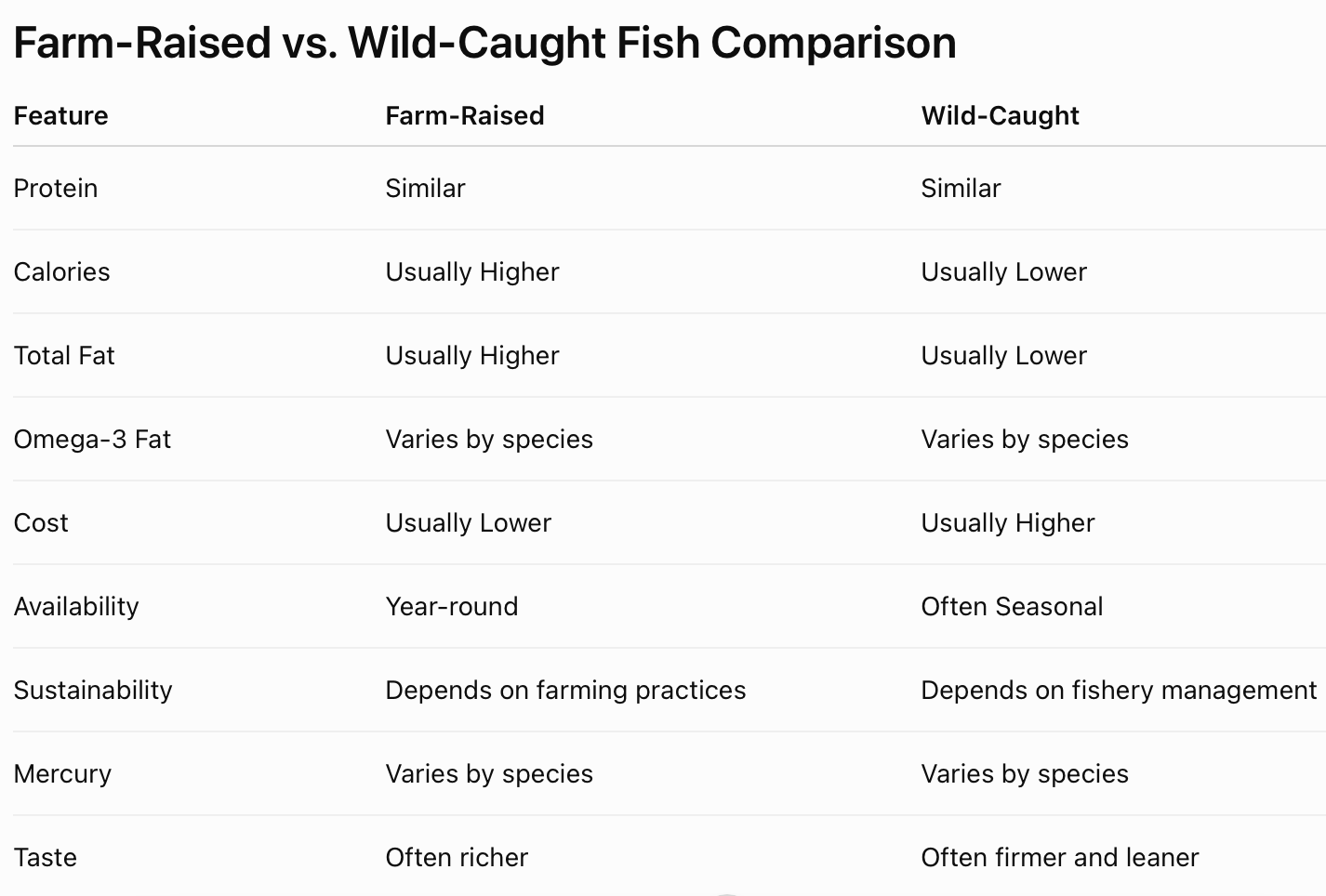
Takeaway: No single category determines which is healthier. Consider the whole picture, including your nutritional goals, preferences, and budget.
Is Farm-Raised Fish Healthy?
Yes.
Farm-raised fish sold in the United States are monitored for food safety and provide:
High-quality protein
Omega-3 fatty acids
Vitamins
Minerals
While some farm-raised fish contain more fat and calories than their wild counterparts, they remain a nutritious option for most people.
Is Wild-Caught Fish Healthier?
Not necessarily.
Wild fish are often:
Lower in calories
Leaner
However, this does not automatically make them healthier.
Both farm-raised and wild-caught fish provide important nutrients and can fit into a balanced eating pattern.
Which Fish Has More Omega-3?
Many people assume wild fish always contain more omega-3 fats.
That's not always true.
Farmed salmon, for example, often contains slightly more omega-3 fats overall because it also contains more total fat.
The biggest factor isn't whether the fish is farmed or wild—it's the species.
For example:
Farmed salmon and wild salmon are nutritionally quite similar.
Farmed tilapia is much different nutritionally than farmed salmon.
Species matters more than how the fish was raised.
Does Farm-Raised Fish Have More Mercury?
Usually, no.
Mercury levels depend primarily on the species of fish, not simply whether it is farm-raised or wild-caught.
Some farm-raised fish actually contain lower mercury levels than many wild species.
Both farm-raised and wild-caught fish sold in the United States fall well below FDA levels of concern when consumed as recommended.
Which Fish Is Better for Weight Loss?
If your goal is weight management:
Wild-caught fish may have a slight advantage because many species are naturally leaner and lower in calories.
However, both farm-raised and wild-caught fish are excellent sources of protein that can help promote fullness and support a healthy eating pattern.
Choosing fish you enjoy eating consistently is often more important than focusing on small differences in calorie or fat content.
Food Safety & Sustainability
Food Safety
Both farm-raised and wild-caught fish sold in the United States are monitored for safety.
Potential contaminants, including mercury, depend largely on the species rather than whether the fish is farmed or wild.
Sustainability
Sustainability varies depending on:
The species
Fishing methods
Farming practices
Both responsibly managed fisheries and well-operated fish farms can contribute to a sustainable seafood supply.
When possible, look for seafood certified by reputable sustainability organizations.
Frequently Asked Questions
Is farm-raised fish healthier than wild-caught fish?
Neither is universally healthier. Both provide valuable nutrients and can support a healthy diet.
Is wild-caught fish worth the extra cost?
If you prefer its flavor or want a leaner fish, it may be worth the added cost. Nutritionally, however, farm-raised fish is also an excellent choice.
Which fish should I buy?
Consider:
Your budget
Taste preferences
Availability
The species of fish
Your nutrition goals
Should I avoid farm-raised fish?
No. Farm-raised fish sold in the United States are regulated for food safety and can be part of a healthy eating pattern.
How often should I eat fish?
Most dietary guidelines recommend eating at least two servings of fish per week, focusing on a variety of seafood choices.
Best Fish for Different Goals
Best for Omega-3 Fatty Acids
Salmon
Sardines
Herring
Mackerel
Best for Weight Management
Cod
Haddock
Pollock
Tilapia
Best Budget-Friendly Options
Farm-raised salmon
Tilapia
Sardines
Canned tuna
Best for Beginners
Salmon
Cod
Tilapia
Mahi-mahi
The Bottom Line
There isn't one "best" choice when comparing farm-raised and wild-caught fish.
For most people:
Eat fish at least twice per week.
Choose a variety of species.
Buy fish you enjoy and can afford.
Focus on your overall eating pattern rather than whether your fish is farm-raised or wild-caught.
The healthiest fish is the one you'll eat consistently as part of a balanced diet.