
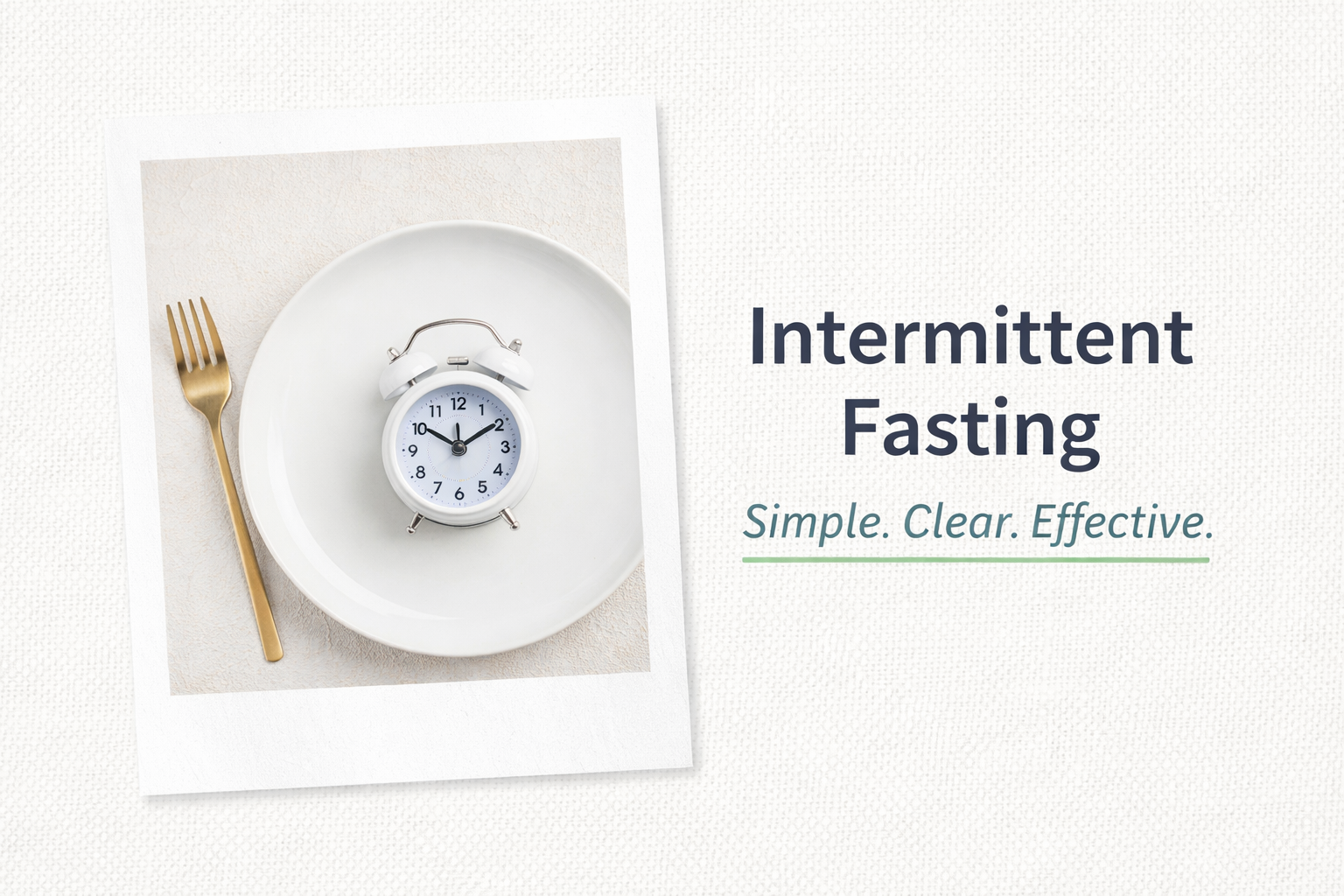
Intermittent fasting (IF) is everywhere—but most people are still guessing how it actually works.
Here’s the simple truth:
It’s not just about when you eat—it’s about how your body shifts fuel.
What Is Intermittent Fasting?
Intermittent fasting is an eating pattern that cycles between periods of eating and fasting.
During fasting, your body shifts from using glucose (sugar) to using fat and ketones for energy.
This isn’t new—fasting has been used for centuries across cultures and even for medicinal purposes.
What’s Actually Happening in Your Body
Your body moves through phases:
Fed state (~0–3 hours after eating): burning glucose
Early fasting (~18 hours): glycogen breaks down
Fasting state (~36+ hours): fat becomes primary fuel
Extended fasting: ketones increase significantly
👉 The key shift:
Lower insulin → fat breakdown (lipolysis) → ketones for energy
How Intermittent Fasting Works (SIMPLY SPEAKING)
You stop eating for a set window (often 12–16+ hours)
Insulin drops
Your body taps into stored fat
Energy comes from fatty acids + ketones instead of glucose
Common Types of Intermittent Fasting
1. Time-Restricted Eating (Most Popular)
Eat within a set window (e.g., 8 hours)
Fast for the remaining time (e.g., 16 hours)
2. Alternate-Day Fasting
Alternate between eating days and reduced-calorie or fasting days
3. Whole-Day Fasting
1–2 full fasting days per week
👉 Most people do best starting with time-restricted eating.
What the Research Says (Benefits)
Intermittent fasting has been associated with:
Reduced inflammation
Weight loss
Improved insulin sensitivity
Better cardiometabolic health
Neuroprotective effects
It may also impact:
Gut health
Sleep patterns
Circadian rhythm
Aging processes
👉 Want a more personalized approach to your symptoms?
Intermittent fasting can help—but it’s not the full picture.
If you’re dealing with:
Bloating
Fatigue
Migraines
Food reactions
👉 Stop guessing what’s triggering your symptoms
Explore the MRT Food Sensitivity Test
(We test, not guess.)
What Most People Get Wrong
Intermittent fasting isn’t magic.
If your meals are:
Low protein
Low fiber
High sugar
You’ll still feel:
Hungry
Tired
Inflamed
👉 What matters most during your eating window:
Protein
Fiber
Healthy fats
Safety: Who Should Be Careful
Intermittent fasting is not for everyone.
Be cautious if you:
Have type 1 diabetes
Have a history of disordered eating
Are pregnant or breastfeeding
Experience significant fatigue or dizziness
Potential side effects include:
Low energy
Irritability
Hunger
Feeling cold
Bottom Line
Intermittent fasting can be a powerful tool—but only when it’s done correctly and personalized.
The goal isn’t just eating less.
It’s:
Stabilizing energy
Reducing symptoms
Supporting metabolism
If intermittent fasting hasn’t worked—or feels confusing—there’s usually a reason.
Find your triggers. Build a plan that actually works.
→ Start with the MRT Test
→ Stop Guessing. Start Feeling Better