
If you’ve been told to “reduce inflammation,” but no one explained how—you’re not alone.
Omega-3 fatty acids are one of the most researched tools for calming inflammation. But the real benefit isn’t just knowing they’re “good for you”—it’s understanding how to use them in a way that actually improves how you feel.
Let’s simplify it.
What Are Omega-3s (And Why They Matter)
Omega-3 fatty acids are essential fats—meaning your body can’t make them on its own.
The three main types:
EPA (Eicosapentaenoic acid)
DHA (Docosahexaenoic acid)
ALA (Alpha-linolenic acid)
Here’s the key:
EPA + DHA = direct anti-inflammatory effects
ALA = plant-based, but only partially converted
Your body converts very little ALA into EPA/DHA, which is why food sources matter.
How Omega-3s Reduce Inflammation
Inflammation isn’t always bad—it’s your body’s response to stress or injury.
But chronic inflammation?
That’s where symptoms show up:
Bloating
Fatigue
Joint pain
Headaches
Skin issues
Omega-3s help by:
Reducing inflammatory signaling pathways
Supporting cellular repair
Balancing the immune response
Think of them as turning the volume down on inflammation, not eliminating it entirely.
Why Fish-Based Omega-3s Work Better
Marine sources (like fish) contain EPA and DHA in their active forms—the forms your body actually uses.
That means:
Faster absorption
More direct impact on inflammation
Stronger support for heart and metabolic health
This is why most guidelines recommend regular intake of fatty fish.
Plant-based omega-3s still matter—but they’re not a complete substitute.
Omega-3 vs. Omega-6: The Balance Problem
Most people aren’t deficient in omega-6—they’re overloaded.
Omega-6 fats (common in processed foods and seed oils) can:
Promote inflammation when excessive
Disrupt balance with omega-3s
The goal isn’t elimination—it’s rebalancing:
Increase omega-3s
Reduce ultra-processed omega-6 sources
Best Food Sources of Omega-3s
Marine (Most Effective)
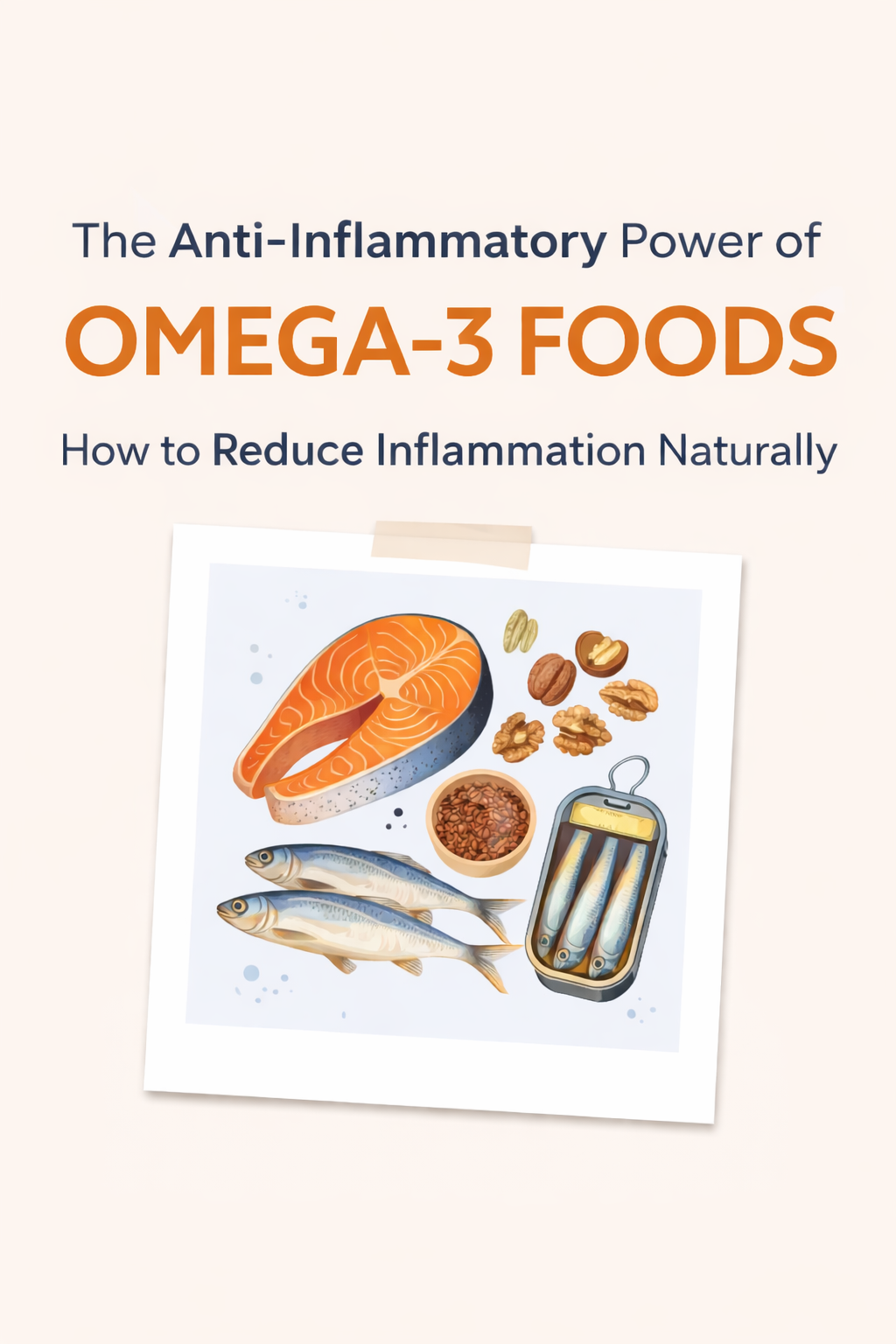
Salmon
Sardines
Mackerel
Anchovies
Plant-Based (Supportive)
Chia seeds
Flaxseeds
Walnuts
If your goal is symptom relief, prioritize marine sources first.
👉 Still dealing with inflammation symptoms like bloating, fatigue, or headaches?
You might not need more supplements—you need clarity on what’s triggering your body.
The MRT test identifies your personal inflammatory food triggers so you can:
Stop guessing
Reduce symptoms faster
Build a plan that actually works
👉 Start with MRT – We Test, Not Guess →
Do You Need an Omega-3 Supplement?
Sometimes—but not always.
You might benefit if:
You don’t eat fish regularly
You have high inflammation symptoms
You’re on a restrictive diet
But supplements aren’t the first step.
Start with:
Food
Consistency
Balance
Then layer in supplements if needed.
How to Build an Anti-Inflammatory Plate
Instead of overthinking it, use this simple framework:
Protein → stabilizes blood sugar
Fiber → supports gut health
Healthy fats (omega-3s) → reduce inflammation
Example:
Salmon + quinoa + roasted vegetables
Greek yogurt + chia seeds + berries
This is where most people start to feel better—quickly.
Wrapping It Up: Look Beyond the Headlines
Omega-3s aren’t a trend—they’re a tool.
But they work best when:
You choose the right sources
You stay consistent
You pair them with a structured approach
And if you’re still not seeing results?
It may not be about adding more—it may be about removing what’s triggering you.
You don’t have to keep guessing what your body needs.