
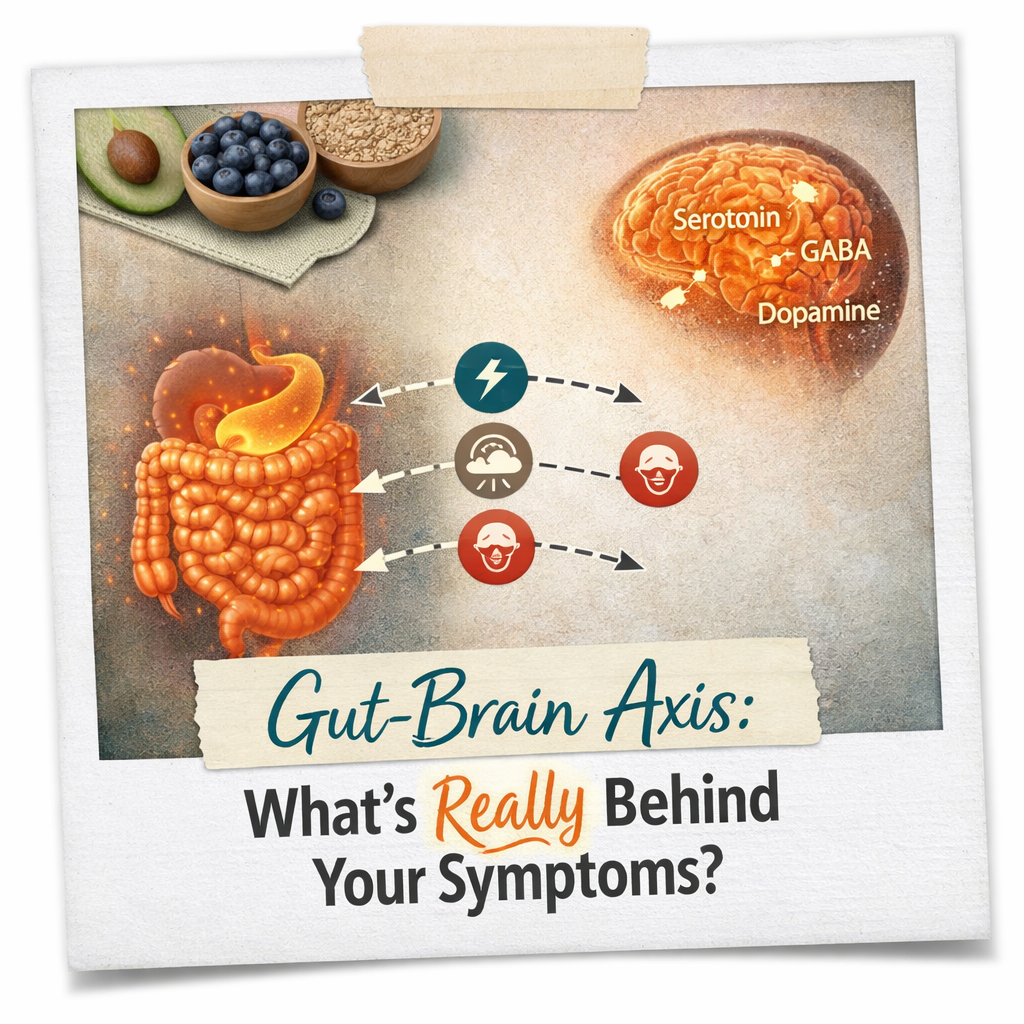
If you’ve ever felt bloated and anxious…
tired and foggy…
or just “off” without a clear reason—
You’re not imagining it.
Your gut and brain are constantly communicating. When that connection is off, symptoms show up everywhere.
What Is the Gut-Brain Axis?
The gut-brain axis is a two-way communication system between your digestive system and your brain.
Your gut influences:
Mood
Focus
Stress
Your brain influences:
Digestion
Inflammation
Sensitivity
At the center of this is your gut microbiome — trillions of bacteria that help produce chemicals that affect how you feel.
Why You Feel Symptoms (Even When Labs Look Normal)
This connection explains why symptoms rarely exist in isolation:
Bloating + anxiety
Fatigue + brain fog
IBS + mood swings
Your gut produces key neurotransmitters like serotonin, GABA, and dopamine. When your gut is off, these signals get disrupted — leading to real, physical symptoms.
The Real Driver Most People Miss
It’s not just “gut health.”
It’s what’s triggering your gut.
Even healthy foods can:
Irritate your immune system
Disrupt your microbiome
Increase inflammation
Stop Guessing What’s Triggering Your Symptoms
If you’ve tried “eating healthy” and still don’t feel better, this is where clarity changes everything.
MRT Testing identifies your personal food and chemical triggers.
Tests 176 foods and additives
Identifies low, moderate, and high reactivity
Gives you a clear starting point
How Nutrition Impacts the Gut-Brain Axis
What you eat directly shapes how you feel.
Key nutrients to focus on:
Fiber (feeds beneficial bacteria)
Omega-3s (reduce inflammation)
Probiotics (support microbiome balance)
Polyphenols (protect gut health)
Important: Even healthy foods can be a problem if your body reacts to them.
Signs Your Gut-Brain Axis Needs Support
Bloating or digestive discomfort
Anxiety or mood swings
Low energy or brain fog
Feeling worse after eating
These are signals — not random symptoms.
Simple Ways to Start Feeling Better
Start here:
Build meals with protein, fiber, and healthy fats
Reduce ultra-processed foods
Add probiotic-rich foods (if tolerated)
Eat consistently (don’t skip meals)
Manage stress
Ready to Feel Better?
👉 Identify your triggers with MRT Testing
You don’t have to figure this out alone.