
Feeling worse after sulfur-rich foods?
If eggs, garlic, onions, or cruciferous vegetables leave you bloated, nauseated, or uncomfortable — especially while on a GLP-1 — you’re not imagining it.
Relief doesn’t require eliminating everything. It requires structure.
Eggs, garlic, broccoli, and even healthy greens can trigger symptoms in sensitive individuals. But eliminating them long-term isn’t always the solution.
The key isn’t restriction. It’s strategy.
Sulfur might not be a nutrient you think about every day, but your body relies on it more than you may realize. This natural mineral helps keep your hair, skin, nails, joints, and even your immune system strong. It also plays an important role in detoxification and antioxidant production — meaning it helps your body repair and protect itself daily.
Even though sulfur is found in many common foods, some people may need to pay closer attention to how much they consume. Here’s what to know about sulfur-rich foods, why your body needs them, and when it might make sense to limit them.
Why Sulfur Matters for Your Health
Sulfur is found in certain amino acids — the building blocks of protein — and supports essential functions in the body, including:
Building and repairing muscle and tissues
Helping make keratin, which supports healthy hair, skin, and nails
Supporting liver detoxification pathways
Maintaining flexible, healthy joints
Producing antioxidants, which protect your cells from everyday stress
Most people naturally consume enough sulfur through a balanced diet. But depending on digestion, sensitivities, or certain medical conditions, you may notice symptoms that relate to sulfur intake.
When You Might Need to Limit Sulfur
While sulfur is beneficial, some people are more sensitive to it. You may consider reducing high-sulfur foods if you experience:
1. Sensitive Digestion or IBS
Certain sulfur-rich foods — especially proteins and cruciferous vegetables — can increase gas and bloating. For individuals with IBS, this can sometimes worsen discomfort.
2. Sulfite Sensitivity
Sulfites (commonly found in wine and packaged foods) are different from naturally occurring sulfur in whole foods, but individuals with sulfite reactions may choose to limit both. Symptoms can include breathing difficulties, rashes, or flushing.
3. Digestive Conditions (such as colitis)
High sulfur intake may not be ideal for everyone with inflammatory gut conditions. Always consult with a registered dietitian or your physician before making restrictive dietary changes.
High-Sulfur Foods to Know
If you’re curious about where sulfur shows up in your diet, here’s a helpful breakdown.
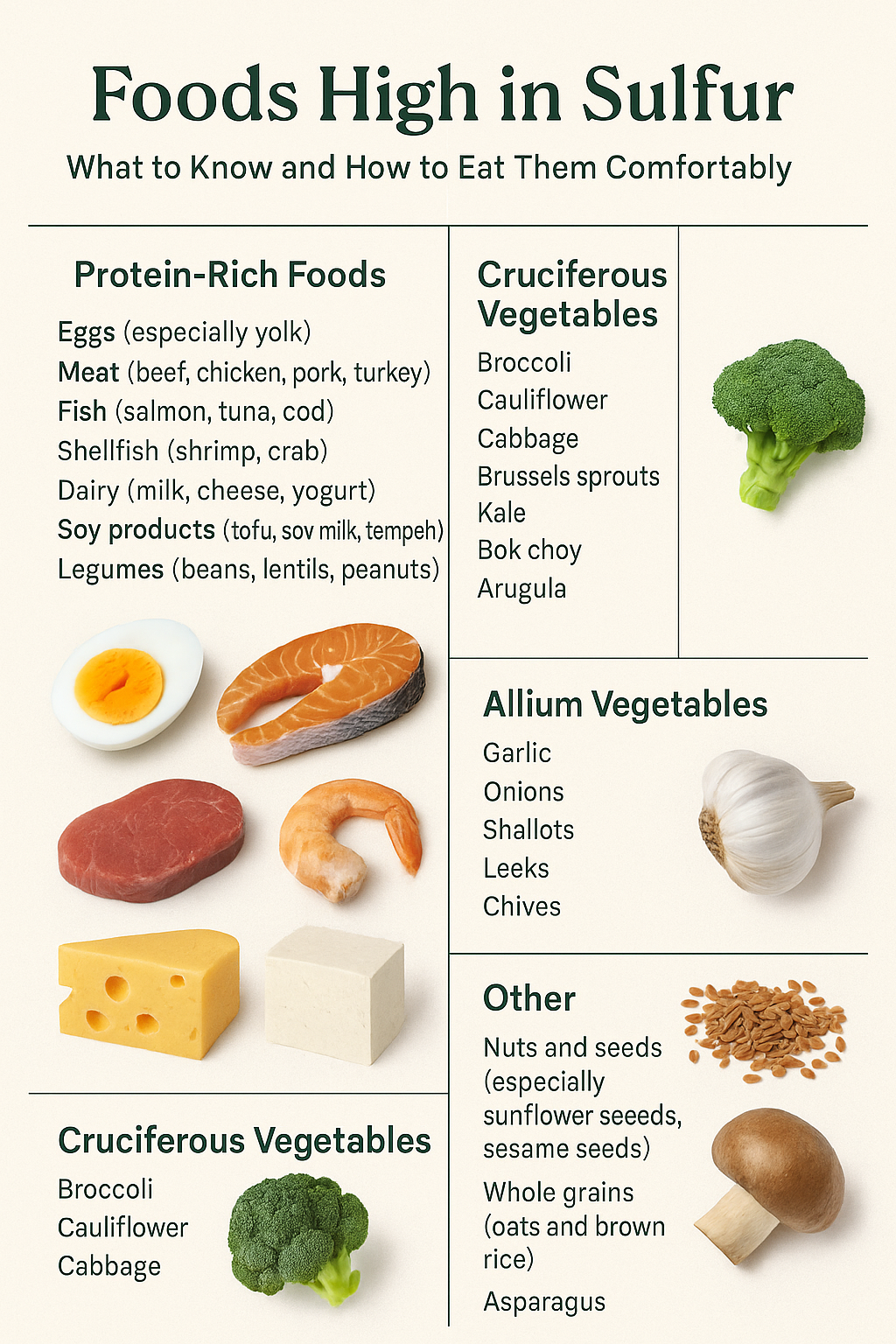
1. Protein-Rich Foods
These foods contain sulfur-based amino acids such as methionine and cysteine:
Eggs (especially the yolk)
Meat: beef, chicken, pork, turkey
Fish: salmon, tuna, cod
Shellfish: shrimp, crab
Dairy: milk, cheese, yogurt
Soy products: tofu, soy milk, tempeh
Legumes: beans, lentils, peanuts
These foods are nutrient-dense and support muscle repair, immunity, and metabolism — but they can also contribute to digestive symptoms in sulfur-sensitive individuals.
2. Cruciferous Vegetables
Loved for their fiber and cancer-protective antioxidants, cruciferous vegetables contain sulfur-rich compounds called glucosinolates:
Broccoli
Cauliflower
Cabbage
Brussels sprouts
Kale
Bok choy
Arugula
These veggies are incredibly healthy — but they can produce more gas, especially for those with IBS or gut sensitivities.
3. Allium Vegetables
Their strong smell and flavor come from sulfur compounds:
Garlic
Onions
Shallots
Leeks
Chives
These foods offer anti-inflammatory and immune benefits, though they can also trigger symptoms for individuals with sensitivities (including those following a low-FODMAP diet).
4. Other Sulfur-Containing Foods
Additional sources include:
Nuts and seeds (especially sunflower and sesame)
Whole grains like oats and brown rice
Asparagus
Mushrooms
These ingredients add variety, fiber, and nutrients to your diet while contributing small amounts of sulfur.
Should You Change Your Sulfur Intake?
Most people don’t need to avoid sulfur — in fact, it's essential for overall health. But if you suspect sulfur-rich foods are contributing to digestive symptoms, it’s worth tracking patterns or working with a dietitian to customize your intake.
A personalized approach can help you:
Reduce symptoms without unnecessary restriction
Identify which sulfur-containing foods you tolerate best
Maintain a nutrient-dense, balanced diet
Support gut health in a sustainable way
If sulfur foods keep triggering discomfort, we may need to look deeper.
Sometimes it’s:
• Portion tolerance
• Slowed motility
• Gut adaptation
• Or actual food sensitivity
If you're tired of experimenting alone, this is exactly what 1:1 nutrition support is for.
💚 Dietitian Pick: Sulfur-rich foods don't have to be off limits. If they leave you feeling bloated or uncomfortable, Enzymedica Digest Gold may help support digestion while you work on finding your personal tolerance.* → Shop it here