
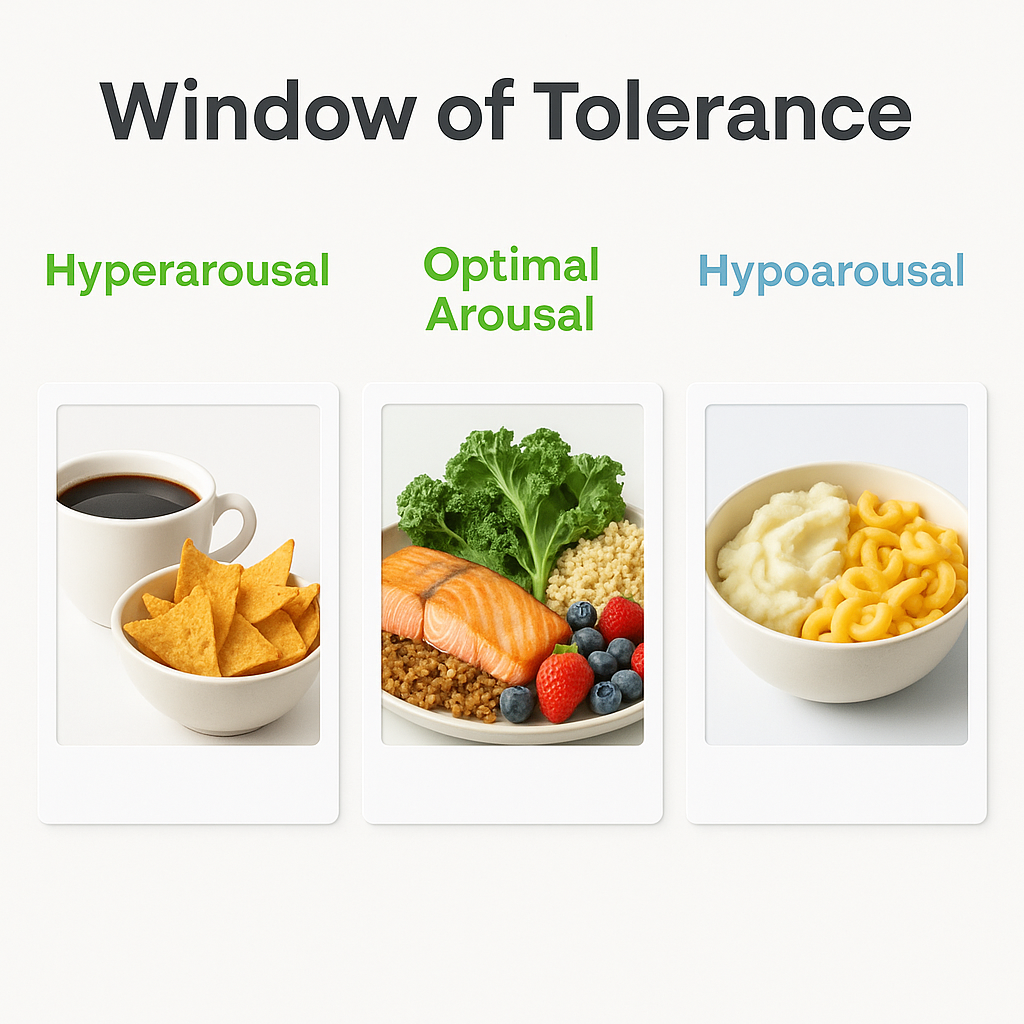
Stress is a normal part of life—but how we handle that stress can vary widely from one day to the next. One helpful way to understand your emotional capacity is by learning about your Window of Tolerance, a concept that describes the mental and physical space where you feel calm, present, and able to cope with everyday challenges.
When you’re within this window, you can think clearly, make thoughtful choices, and stay connected to your body’s cues—including hunger, fullness, and energy needs. But when stress or strong emotions push you outside of that window, it becomes much harder to regulate both emotions and behaviors, including eating patterns.
Let’s break down what the Window of Tolerance is, why it matters, and how it influences your relationship with food.
What Is the Window of Tolerance?
Your Window of Tolerance is your optimal emotional zone—the place where you feel balanced, grounded, and capable of managing life’s ups and downs. Everyone has a unique window; some people naturally have a wider one, while others may find theirs narrows during periods of stress, burnout, or emotional overwhelm.
The window includes three key zones:
1. Optimal Arousal (Inside the Window)
This is where you feel:
Calm
Focused
Present
Emotionally steady
Able to cope with stress
In this zone, you can respond to situations thoughtfully rather than reactively.
2. Hyperarousal (Above the Window)
This is the “fight or flight” state. It may feel like:
Anxiety or panic
Irritability or anger
Restlessness or jumpiness
Feeling overwhelmed or on edge
Racing thoughts
Your energy and emotions spike, making it hard to slow down or think clearly.
3. Hypoarousal (Below the Window)
This is the “shutdown” state. It may feel like:
Numbness or disconnection
Exhaustion or low energy
Feeling zoned out or foggy
Difficulty speaking or taking action
Lack of motivation
Your system slows down, making even small tasks feel hard.
What Affects the Size of Your Window?
Your window is not fixed—it expands or contracts based on your experiences, environment, and self-care practices.
A Narrow Window May Be Linked To:
Chronic stress
Emotional exhaustion or burnout
Feeling unsafe or unsupported
Poor sleep
Long-term overwhelm
A narrower window means it takes less stress for you to feel thrown off balance.
A Wider Window May Be Supported By:
Rest and consistent self-care
Supportive relationships
Movement and physical activity
Regular meals
Emotional regulation tools
A wider window allows you to navigate more stress without shifting into hyperarousal or hypoarousal.
Why Your Window of Tolerance Matters for Eating Habits
Your emotional state has a major impact on your relationship with food. The document highlights this beautifully: emotional balance plays a big role in the way we eat.
When You’re Inside Your Window
You can:
Make intentional food choices
Stay tuned in to hunger and fullness
Notice changes in appetite
Maintain regular eating patterns
Choose foods that support how you want to feel
Your body and mind are communicating clearly.
When You’re Outside Your Window
You may:
Reach for comfort foods
Eat quickly or mindlessly
Lose your usual structure with meals
Skip eating because of numbness or overwhelm
Overeat because your cues feel muted or chaotic
In these states, eating becomes a coping mechanism rather than a response to hunger.
How to Strengthen and Widen Your Window of Tolerance
Here are supportive practices that gently help expand your emotional capacity:
⭐ 1. Regular, Nourishing Meals
Even small, predictable meals help keep your nervous system regulated.
⭐ 2. Gentle Movement
Walking, stretching, or light exercise helps release stress and steady your energy.
⭐ 3. Grounding Skills
Deep breathing, sensory grounding, or brief mindfulness exercises can bring you back into your window.
⭐ 4. Rest and Sleep Hygiene
A rested nervous system is more resilient.
⭐ 5. Supportive Relationships
Feeling safe and connected naturally widens the window.
⭐ 6. Working with a Dietitian or Therapist
Guided support helps you understand your cues, patterns, and emotional triggers around food.
Final Thoughts
Your Window of Tolerance is a powerful framework for understanding not just your emotional health, but your eating habits as well. The more you can stay within that window—and the more you expand it over time—the easier it becomes to make choices that support your body, mind, and long-term health goals.
If you notice that stress frequently pushes you into hyperarousal (anxiety, overwhelm) or hypoarousal (numbness, shutdown), you’re not alone. This is a human response, and with support, your window can widen.
At Compass Nutrition, we help patients connect emotional regulation with sustainable eating habits so they can feel more balanced, nourished, and in control.
Book a virtual session today and get personalized support that meets you exactly where you are.