
If you live with Inflammatory Bowel Disease (IBD), you already know this truth: what you eat can feel very different depending on whether you’re in remission or in a flare.
As a dietitian, I want to be very clear about something upfront—there is no single “IBD diet.” Nutrition for IBD is flexible, phase-dependent, and highly individual. The goal isn’t perfection. It’s symptom control, nourishment, and quality of life.
Let’s break this down in a way that actually feels usable.
What is IBD—briefly?
IBD is a group of inflammatory conditions affecting the digestive tract, most commonly Crohn’s disease and Ulcerative colitis.
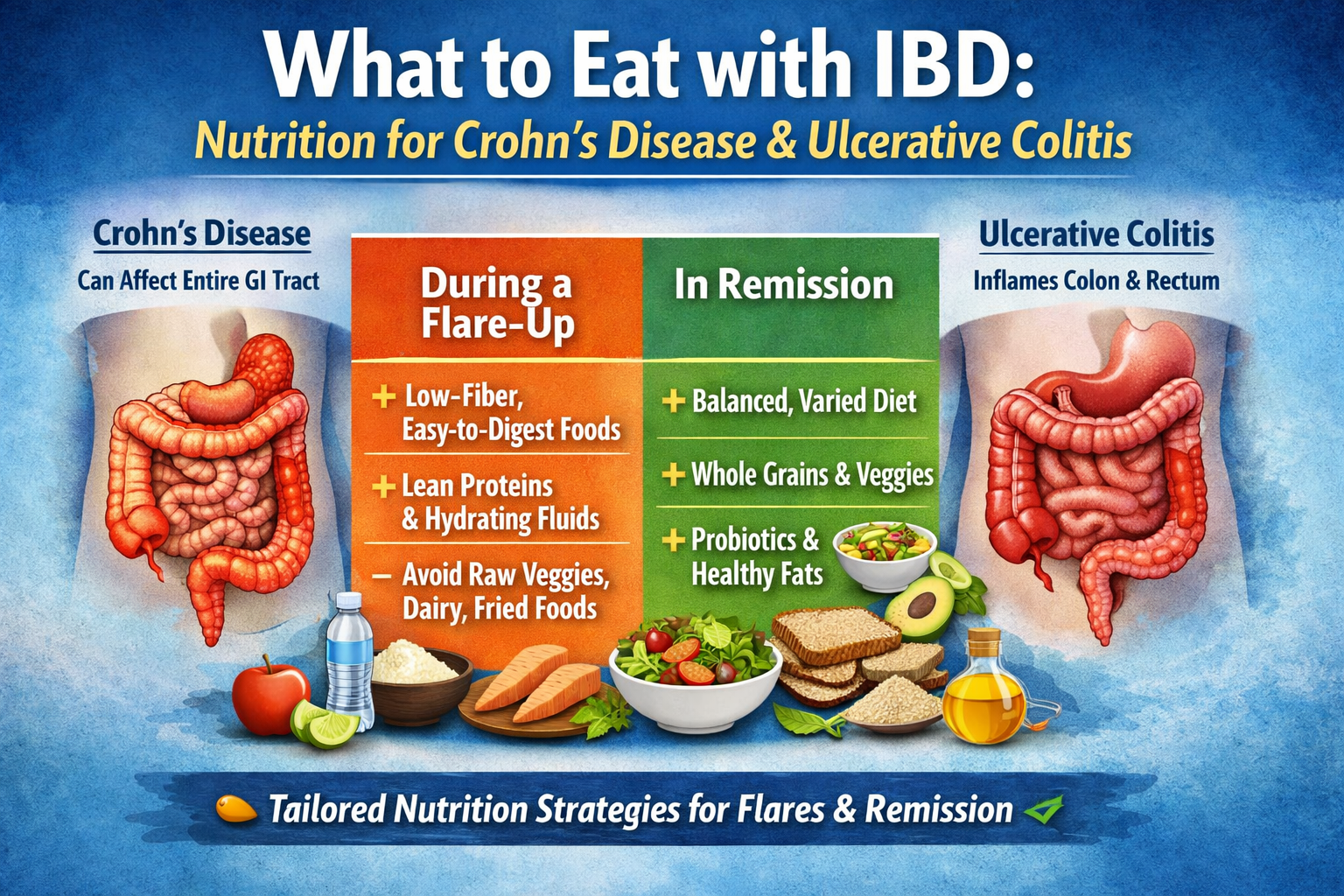
Crohn’s disease can affect any part of the GI tract, from mouth to anus.
Ulcerative colitis affects the colon and rectum only.
Because inflammation shows up differently, nutrition strategies must change depending on where inflammation is activeand whether symptoms are flaring or calm.
Nutrition during an IBD flare-up
When symptoms like diarrhea, urgency, cramping, or fatigue ramp up, the goal is simple:
Reduce digestive stress while still meeting basic nutrition needs.
Key principles during flares
Eat small, frequent meals
Choose low-fiber, easy-to-digest foods
Prioritize hydration and electrolytes
Limit foods that increase gut workload or irritation
Foods that are usually better tolerated during flares
White rice, plain pasta, white bread
Lean proteins: chicken, turkey, fish, eggs
Cooked, peeled fruits (bananas, applesauce)
Cooked, peeled vegetables (carrots, potatoes, zucchini)
Fluids: water, broth, electrolyte drinks
These foods help fuel the body without overstimulating an already inflamed gut
Foods commonly avoided during flares
Raw vegetables, beans, whole grains
Fried or greasy foods
Spicy foods
Dairy (unless clearly tolerated)
Alcohol and caffeine
This isn’t about “bad foods.” It’s about timing. Foods that are nourishing in remission can feel unbearable during active inflammation.
Eating during remission
When inflammation calms, nutrition shifts from symptom survival to maintenance, prevention, and rebuilding.
Goals during remission
Prevent nutrient deficiencies
Support gut health as tolerated
Maintain energy and muscle mass
Expand food variety carefully
Foods often included during remission
Lean proteins (chicken, fish, eggs, tofu)
Cooked vegetables and, gradually, some raw
Whole grains like oatmeal, quinoa, or brown rice (if tolerated)
Healthy fats: olive oil, avocado, nut butters
Dairy or dairy alternatives as tolerated
Hydration still matters—and so does paying attention to how your body responds to reintroduced foods
Crohn’s vs. Ulcerative Colitis: why the diet may differ
Even within IBD, nutrition isn’t one-size-fits-all.
Crohn’s disease may require more adjustments depending on which part of the GI tract is affected. Some people need temporary liquid or very low-residue diets during severe flares.
Ulcerative colitis often requires careful fiber and fluid management, especially when diarrhea is present.
This is why personalization matters so much.
Practical tips I give my IBD patients
Keep a simple food and symptom journal—patterns matter more than rules
Reintroduce foods slowly and intentionally
Watch for common deficiencies (iron, vitamin D, B12)
Prioritize protein and hydration, especially during flares
Work with a registered dietitian who understands IBD—not diet culture
The bottom line
Nutrition for IBD isn’t about restriction—it’s about strategy.
Your needs during a flare are different from your needs in remission. Both are valid. Both deserve support. And neither requires suffering through foods that don’t work for your body.
If you’re navigating Crohn’s disease or ulcerative colitis and feel unsure about what—or how—to eat, getting individualized guidance can make a meaningful difference.
Food should support your healing, not fight against it.
Struggling to figure out what foods work for your IBD?
Get personalized nutrition support for Crohn’s disease or ulcerative colitis. We’ll tailor your plan for flare-ups, remission, labs, and real life.