
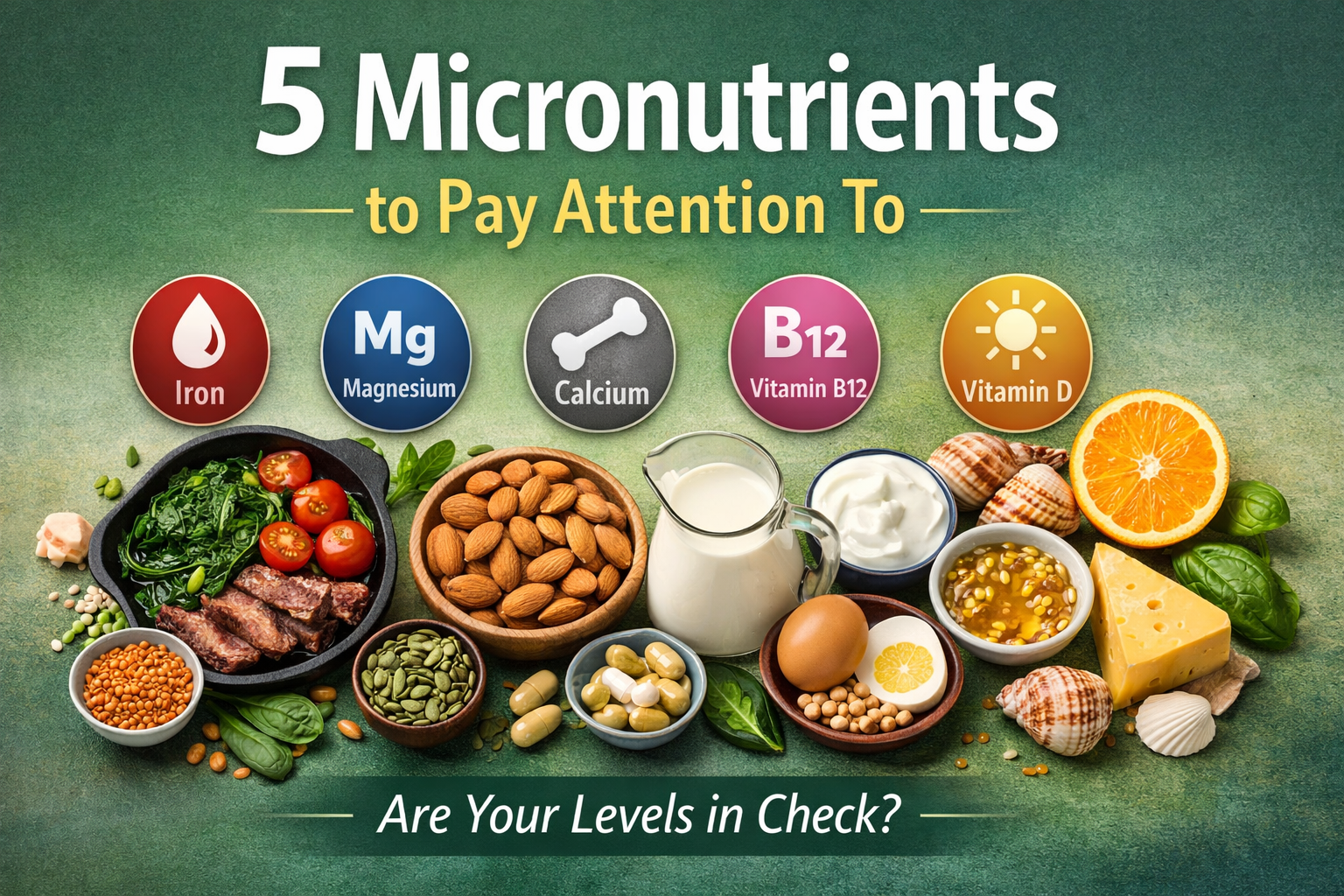
Why small nutrient gaps can have a big impact on your energy, mood, and overall health
Why Micronutrients Matter
Most people focus on calories, protein, carbs, or fat when they think about nutrition. But vitamins and minerals—also known as micronutrients—quietly run the show behind the scenes.
Micronutrients support everything from energy production and brain function to bone strength, immune health, and mood regulation. And even if you eat what looks like a “balanced” diet, it’s still surprisingly easy to fall short. Busy schedules, limited food variety, digestive issues, medications, stress, and life stages like pregnancy or menopause can all create nutrient gaps over time.
At Compass Nutrition, we see this every day: people doing most things right, yet still feeling tired, foggy, achy, or off. Often, this overlaps with concerns we see in clients seeking support for fatigue, gut health, GLP-1 medication nutrition, or unexplained symptoms that don’t improve with surface-level changes. Often, micronutrient status is part of the missing puzzle.
Below are five key micronutrients we commonly see clients struggle to get enough of—and why they matter more than you might think.
1. Iron: For Energy, Focus, and Healthy Blood
If you feel exhausted despite sleeping well, get short of breath easily, or feel mentally foggy, iron status is worth a closer look.
Iron is essential for making hemoglobin, the protein in red blood cells that carries oxygen throughout your body. When iron is low, oxygen delivery suffers—and so does your energy, focus, and endurance.
Signs you may be low in iron
Persistent fatigue or weakness
Feeling cold often
Shortness of breath with mild activity
Lightheadedness
Difficulty concentrating
Women with heavy menstrual cycles, people who are pregnant, endurance athletes, vegetarians/vegans, and those with digestive conditions are at higher risk.
Food sources of iron
Beef, chicken, turkey
Lentils, beans, tofu
Spinach, pumpkin seeds
👉 Tip: Pair plant-based iron with vitamin C (like citrus, tomatoes, or bell peppers) to improve absorption.
2. Magnesium: Stress, Sleep, and Muscle Support
Magnesium is involved in 300+ processes in the body, yet many adults don’t meet daily needs—especially those under chronic stress.
Magnesium plays a role in:
Muscle relaxation and cramp prevention
Nervous system regulation
Sleep quality
Blood sugar balance
Blood pressure control
Signs of low magnesium
Muscle cramps or twitching
Trouble sleeping
Anxiety or irritability
Fatigue
Headaches
Stress, alcohol, certain medications, and digestive conditions can all increase magnesium losses.
Food sources of magnesium
Leafy greens
Nuts and seeds
Beans and lentils
Whole grains
Dark chocolate
There are different forms of magnesium, and they are not interchangeable. We often see magnesium needs vary significantly in clients managing stress-related fatigue, digestive symptoms, or GLP-1–related side effects, making personalization essential. Some support sleep and relaxation, while others mainly affect digestion. Choosing the right one matters.
3. Calcium: Not Just for Bones
Calcium is best known for bone health, but it’s also critical for:
Muscle contraction
Heart rhythm
Nerve signaling
Your body tightly regulates blood calcium levels—often by pulling calcium from bones if intake is too low. Over time, this can weaken bone structure.
Calcium needs change across life stages
Growth and adolescence
Pregnancy and breastfeeding
Perimenopause and menopause
Older adulthood
Food sources of calcium
Yogurt, milk, cheese
Fortified plant milks
Tofu made with calcium
Canned salmon or sardines (with bones)
Leafy greens like kale and bok choy
Calcium supplements can be helpful for some people, but more is not better. Calcium balance is especially important for clients with gut absorption issues, hormonal shifts, or those using weight-loss medications that may alter appetite and intake patterns. Excess calcium may interfere with other minerals or cause GI issues. Food first, supplements second.
4. Vitamin B12: Brain, Nerves, and Energy
Vitamin B12 is essential for:
Red blood cell formation
Nerve health
DNA synthesis
Energy metabolism
Unlike many nutrients, B12 is found almost exclusively in animal foods, making deficiency more common in plant-based diets. Absorption also declines with age and with certain medications.
Signs of low B12
Fatigue
Brain fog or memory issues
Tingling or numbness in hands and feet
Mood changes
Left untreated, deficiency can lead to nerve damage—sometimes irreversible.
B12 sources
Meat, poultry, fish
Eggs and dairy
Fortified plant milks and cereals
B12 supplements are generally safe, but form and dosage matter—especially for people with absorption issues related to gut health, long-term medication use, or restrictive eating patterns. This is why we frequently recommend pairing symptoms with targeted labs, not guesswork.
5. Vitamin D: Immunity, Mood, and Muscle Strength
Vitamin D supports:
Calcium absorption
Bone health
Immune function
Muscle strength
Mood regulation
Despite being called the “sunshine vitamin,” deficiency is extremely common—especially in northern climates or for people who spend most of their time indoors.
Signs of low vitamin D
Low energy
Frequent illness
Bone or muscle aches
Low mood, especially in winter
Sources of vitamin D
Sun exposure
Fatty fish (salmon, sardines)
Egg yolks
Fortified dairy or plant milks
Many adults benefit from supplementation, but dosing should be personalized and guided by lab results—particularly for those experiencing low energy, immune challenges, or difficulty losing weight despite lifestyle changes.
Putting It All Together: Your Micronutrient Snapshot
These nutrients don’t work in isolation:
Vitamin D helps absorb calcium
Magnesium activates vitamin D
Iron and B12 both affect red blood cell health
Calcium and iron can compete for absorption
This is why random supplement stacking often misses the mark.
Smart next steps
Prioritize food variety first
Pay attention to symptoms—not just calories
Use lab testing when appropriate
Avoid megadoses without guidance
Choose third-party tested supplements
Micronutrients may be small, but their impact is anything but. When one is out of balance, it can affect digestion, metabolism, inflammation, and even how well medications—including GLP-1s—are tolerated.
If you’re feeling tired, foggy, moody, or stuck despite eating well, your body may be asking for deeper support.
Ready to go deeper than guesswork?
If you’re experiencing fatigue, brain fog, digestive issues, stalled weight loss, or persistent symptoms despite eating well, an appointment may provide the clarity you’ve been missing.
At Compass Nutrition, we help patients:
Recommend targeted lab testing to uncover nutrient deficiencies
Interpret results through a functional, food-first lens
Align supplementation with gut health, metabolism, and lifestyle
Optimize nutrition alongside GLP-1 medications, MRT protocols, or weight and hormone goals
Sustainable nutrition isn’t about doing more. It’s about precision, balance, and support that fits your real life.