
Healthy Holiday Eating: 4 Tips to Enjoy Food Without Guilt
Clinically reviewed by Adiana Castro, MS, RDN, CDN, LDN, CLT
The holiday season is a time for celebration, meaningful traditions, family gatherings, and delicious food. Yet for many people, it also brings anxiety about eating, weight management, and staying on track with their nutrition goals.
The best approach to healthy holiday eating is to maintain regular meals, enjoy your favorite foods without guilt, engage in enjoyable physical activity, and prioritize sleep and stress management. You can support your nutrition goals without restrictive dieting or waiting until January to start over.
You may find yourself skipping meals before a holiday dinner, eating past fullness because a favorite dish is only available once a year, or promising yourself a fresh start in January.
But what if you could enjoy the holidays without choosing between restriction and overindulgence?
At Compass Nutrition, we believe that healthy holiday eating is about consistency, flexibility, and nourishment—not perfection.
1. Eat Regularly Instead of Saving Calories
Skipping breakfast or lunch to save room for a holiday dinner may seem like a reasonable strategy, but it can often backfire.
Arriving at a gathering extremely hungry can make it more difficult to recognize fullness, pace yourself, and make intentional food choices.
Eating regularly throughout the day can help you:
Maintain more consistent energy levels.
Manage hunger and cravings.
Recognize your body's hunger and fullness signals.
Enjoy holiday meals without feeling overly hungry.
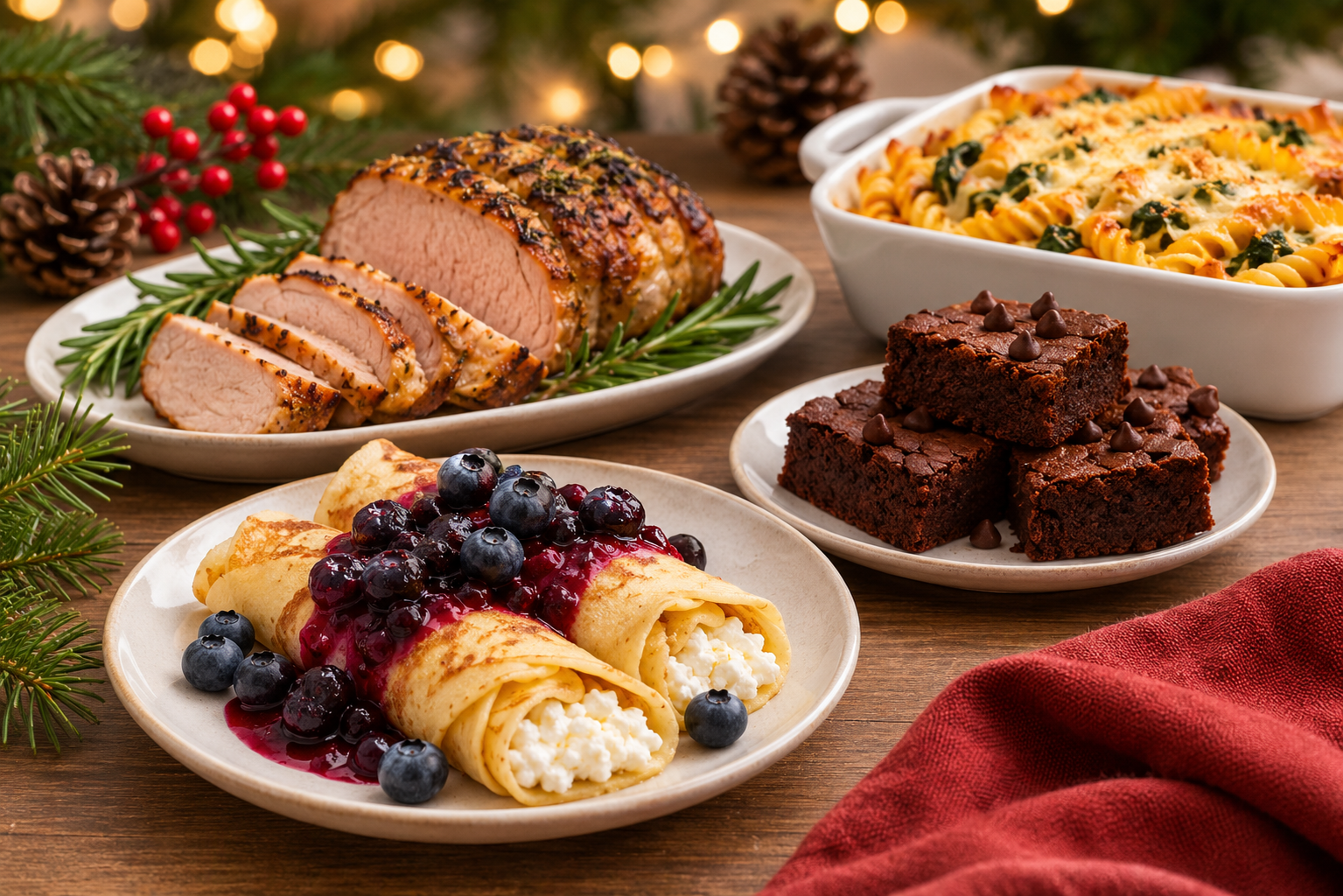
Start your day with a nourishing breakfast that includes protein, fiber, and carbohydrates. Cottage cheese pancakes with berries, oatmeal, or eggs with whole-grain toast are simple options.
The goal is to arrive at your holiday gathering comfortably hungry, not starving.
2. Give Yourself Permission to Enjoy Holiday Foods
Many traditional holiday dishes carry emotional and cultural significance. They remind us of family, childhood memories, and special occasions.
However, the belief that you can only enjoy certain foods once a year can create unnecessary pressure to eat beyond comfortable fullness.
Instead of thinking, “This is my only chance to eat this,” remind yourself that you can enjoy your favorite foods now and again later.
Try to:
Choose foods you genuinely enjoy.
Slow down and appreciate their flavors.
Notice when you feel comfortably satisfied.
Save leftovers to enjoy another day.
You can enjoy traditional holiday foods while still supporting your nutrition and weight management goals.
Food is more than calories. It is also culture, connection, comfort, and celebration.
3. Exercise for Your Well-Being, Not to Earn Food
Have you ever felt that you needed to exercise before a holiday meal or burn off the calories afterward?
Connecting exercise to food compensation can create an unhealthy cycle of guilt and restriction.
Physical activity should be a way to support your health, energy, mobility, and emotional well-being—not a punishment for eating.
During the holidays, consider activities that feel enjoyable:
Taking a walk with family.
Dancing at a holiday gathering.
Stretching or practicing yoga.
Maintaining your regular exercise routine when possible.
Whether you exercise that day or not, your body still deserves nourishment.
You do not need to earn your holiday dessert.
4. Prioritize Sleep and Manage Holiday Stress
Healthy eating is influenced by more than what is on your plate.
Holiday shopping, travel, social commitments, and family responsibilities can disrupt your sleep and increase stress. Both can affect appetite, hunger, and food cravings.
When you are tired or overwhelmed, making intentional nutrition choices may become more challenging.
Support your well-being by:
Maintaining a consistent sleep schedule when possible.
Setting aside time to relax.
Preparing simple, nourishing meals.
Giving yourself permission to decline unnecessary commitments.
A comforting one-pan meal, such as a vegetarian pasta bake with white beans and spinach, can provide nourishment without adding unnecessary stress to your evening.
Rest is not separate from your nutrition goals. It is part of supporting them.
What Does Balanced Holiday Eating Look Like?
Balanced holiday eating does not require strict meal plans, eliminating desserts, or compensating for a large meal.
It means creating a flexible routine that supports your physical and emotional health while allowing room for celebration.
Focus on regular meals, satisfying foods, enjoyable movement, and adequate rest.
One holiday meal does not define your health, just as one nutritious meal does not determine your overall well-being. Your habits over time matter more than any individual occasion.
Frequently Asked Questions About Holiday Eating
How can I avoid overeating during the holidays?
Eat regularly throughout the day, avoid arriving at gatherings extremely hungry, slow down during meals, and pay attention to your body's fullness signals.
Can I enjoy holiday foods while managing my weight?
Yes. Your favorite holiday foods can fit into a sustainable weight management approach. Consistency and balance are more helpful than rigid restriction.
Should I skip meals before a big holiday dinner?
Generally, no. Skipping meals can increase hunger and make it more difficult to recognize fullness later in the day.
Should I exercise more after a holiday meal?
You do not need to exercise to compensate for eating. Choose physical activities that support your overall health and well-being rather than using movement to offset food choices.
How do I get back on track after the holidays?
You do not need to wait until January or follow a restrictive diet. Simply return to your regular eating routine at your next meal.
Enjoy the Holidays With Confidence
You deserve to enjoy the holiday season without constantly worrying about food, calories, or your weight.
At Compass Nutrition, our registered dietitian nutritionists provide personalized, evidence-based nutrition counseling to help you build sustainable eating habits, manage your weight, and develop a healthier relationship with food.
Whether you are navigating holiday eating, managing a health condition, or looking for a more balanced approach to nutrition, we are here to support you.
Compass Nutrition accepts many major health insurance plans. Depending on your benefits, personalized nutrition counseling with a registered dietitian may be available at little or no out-of-pocket cost.
Don't wait until January to prioritize your well-being.