
Reviewed by Adiana Castro, MS, RDN, CDN, LDN, CLT
Folate and folic acid are often used interchangeably, but they're not exactly the same. Both are forms of vitamin B9, an essential nutrient that supports cell growth, red blood cell production, and overall health.
Whether you're reviewing your diet, choosing a multivitamin, or trying to understand your nutritional needs, knowing the difference can help you make informed choices.
What Is the Difference Between Folate and Folic Acid?
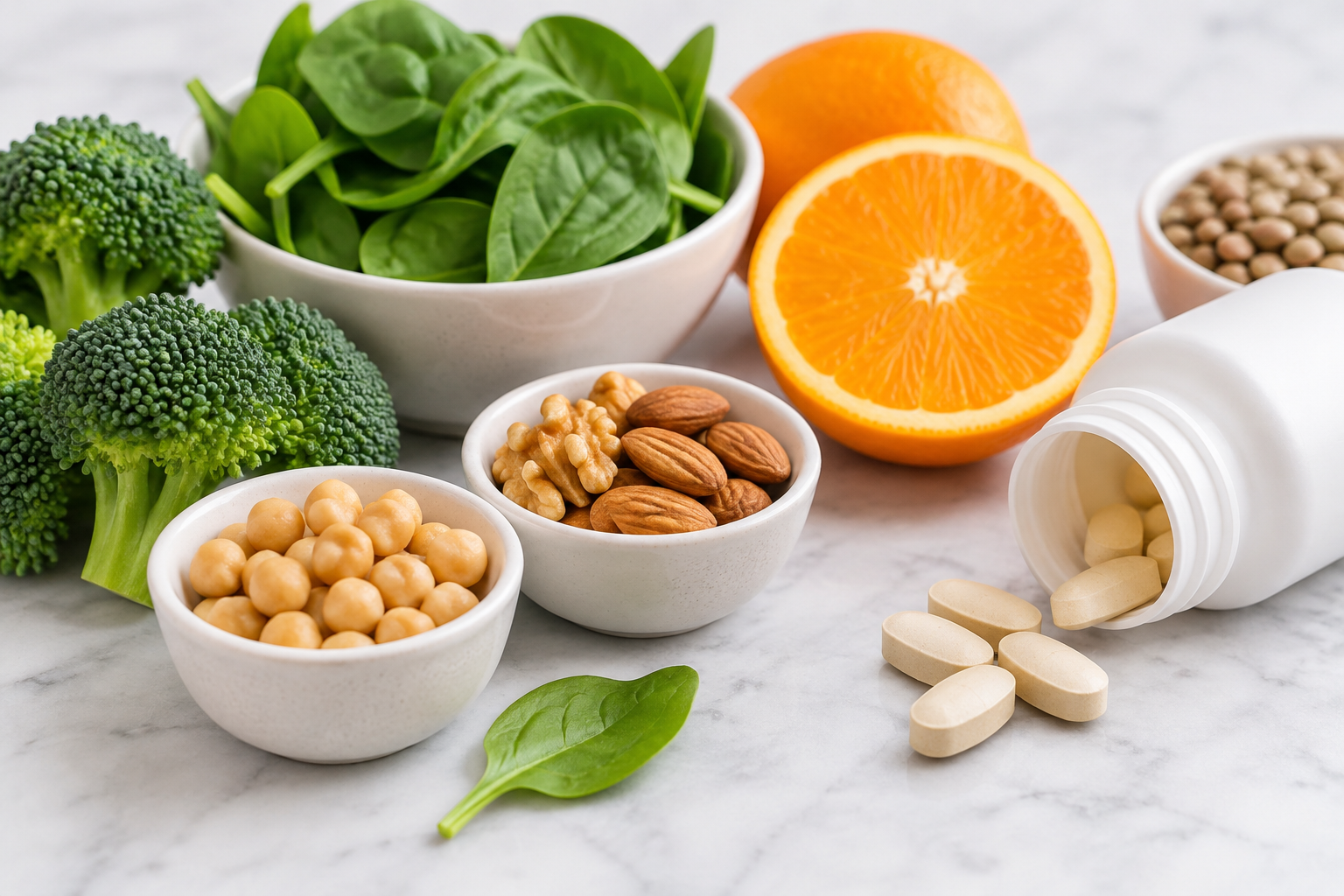
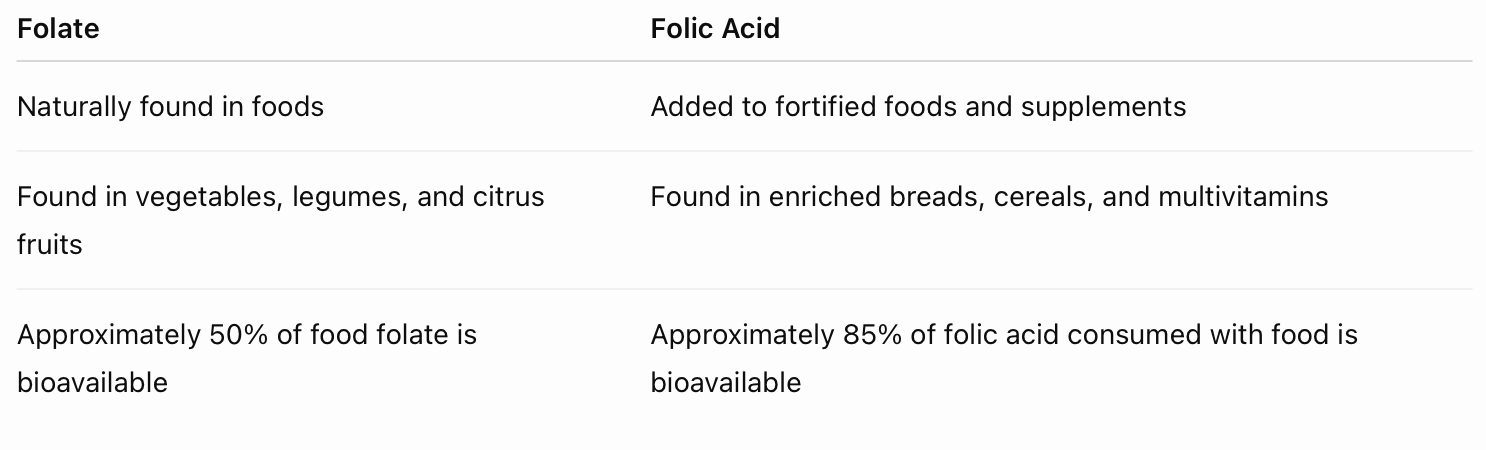
Folate is the naturally occurring form of vitamin B9 found in foods such as leafy greens, beans, oranges, and nuts.
Folic acid is a synthetic form of vitamin B9 added to fortified foods and dietary supplements.
Both help meet your body's vitamin B9 needs, but they differ in their sources and how efficiently they're absorbed.
Why Does Your Body Need Vitamin B9?
Vitamin B9 plays several important roles in maintaining health, including:
Red blood cell production: Helps your body produce healthy red blood cells.
Cell growth and repair: Supports DNA synthesis and normal cell division.
Nervous system health: Contributes to normal neurological function.
Pregnancy support: Helps prevent neural tube defects during early fetal development.
Because your body cannot produce enough folate on its own, getting adequate amounts through food and, when appropriate, supplements is essential.
Is Folate Better Than Folic Acid?
Neither form is automatically better for everyone.
Naturally occurring folate is an important part of a balanced diet, while folic acid offers a convenient, well-absorbed way to meet nutritional needs through fortified foods and supplements.
Some supplements contain methylfolate (5-MTHF), an active form of folate. Although methylfolate can be used by the body, it has not been shown to be superior to folic acid for most people.
Folic acid also has strong clinical evidence supporting its role in preventing neural tube defects.
Your individual needs, dietary habits, and medical history can help determine whether supplementation is appropriate.
How Much Folate Do You Need Each Day?
Recommended daily folate intake varies by life stage.
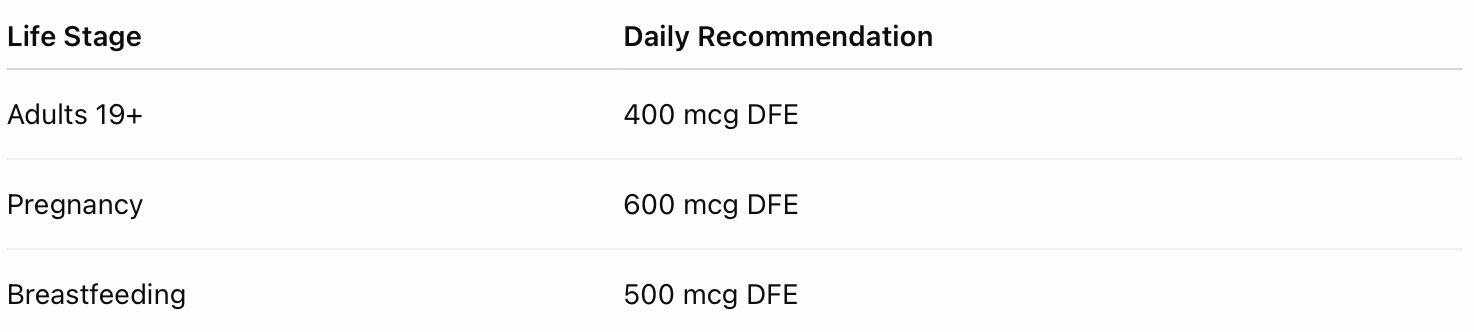
DFE stands for dietary folate equivalents, a measurement that accounts for differences in absorption between folate and folic acid.
People who could become pregnant are also advised to consume 400 mcg of folic acid daily from supplements, fortified foods, or both, in addition to dietary folate.
What Foods Are Naturally High in Folate?
You can increase your folate intake by regularly including foods such as:
Spinach, kale, and other leafy greens
Lentils, chickpeas, and black beans
Asparagus and broccoli
Oranges and avocados
Peas, nuts, and seeds
Eating a variety of these foods helps support adequate folate intake while providing fiber, vitamins, and minerals.
Frequently Asked Questions
Can you get enough folate from food alone?
Many adults can meet their daily folate needs through a balanced diet. However, certain life stages, dietary patterns, or medical conditions may increase the need for supplementation.
What are the signs of folate deficiency?
Low folate levels can contribute to fatigue, weakness, mouth sores, and megaloblastic anemia. These symptoms can overlap with other nutritional deficiencies, making proper evaluation important.
Is folic acid safe to take every day?
Folic acid is generally safe when taken at recommended amounts. However, excessive intake from supplements or fortified foods can mask certain signs of vitamin B12 deficiency. Adults should generally avoid exceeding 1,000 mcg daily from these sources unless medically advised.
Does having an MTHFR gene variant mean you should avoid folic acid?
No. People with common MTHFR variants can still process folic acid. These variants do not automatically require switching to methylfolate.
The Bottom Line
Folate and folic acid both provide vitamin B9, but they come from different sources and are absorbed differently.
For most people, eating folate-rich foods regularly is a great starting point. Supplements may be beneficial depending on your nutritional needs, health history, and stage of life.
At Compass Nutrition, our registered dietitians help you make sense of nutrition information and develop realistic eating habits that support your individual health goals.
Have questions about your nutrient intake or whether supplements are right for you?
Explore personalized nutrition counseling at Compass Nutrition