
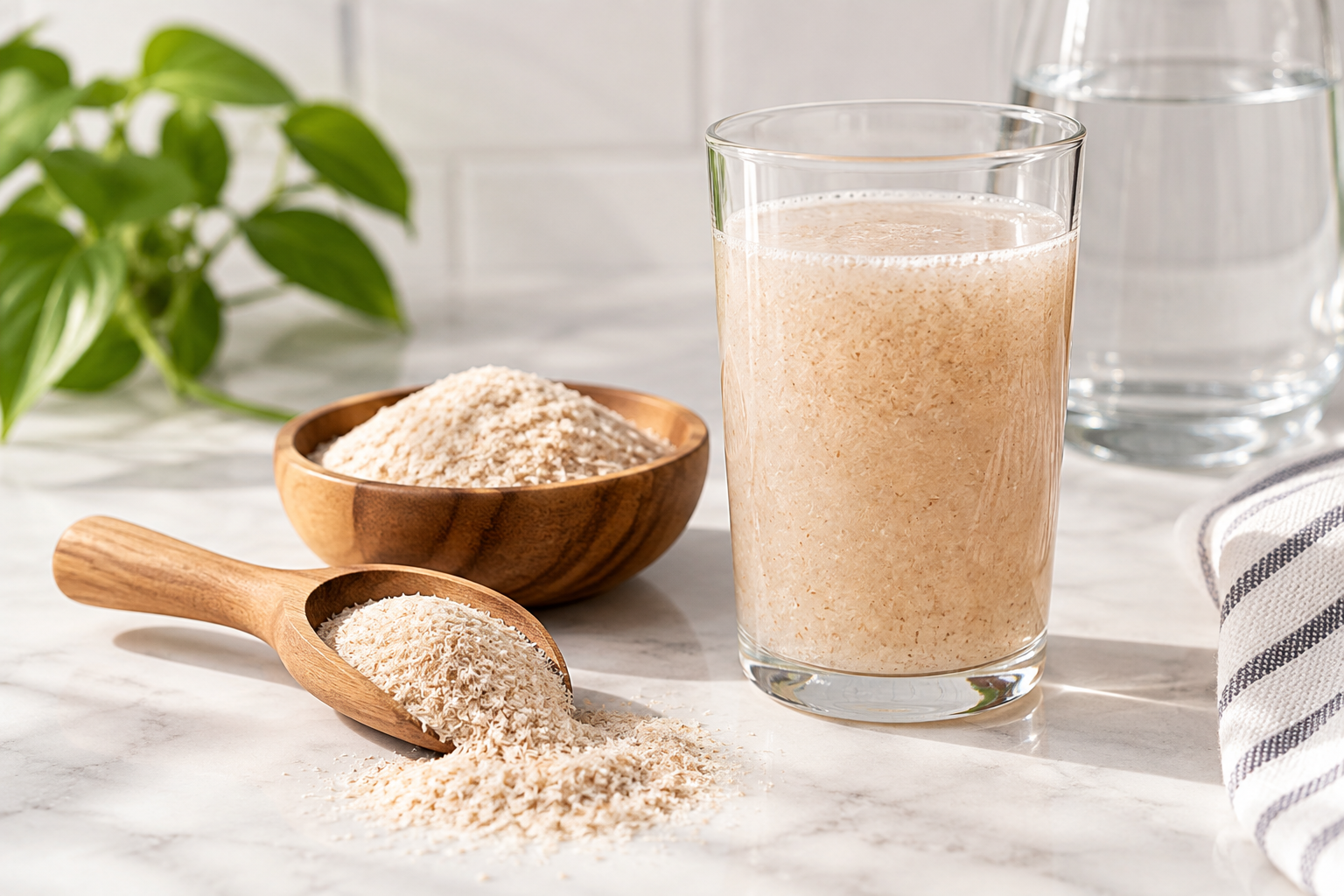
Constipation is common, uncomfortable, and often frustrating. While there are many products marketed for relief, sometimes one of the simplest places to start is fiber—specifically psyllium husk.
Psyllium is a soluble fiber that absorbs water and forms a soft gel in the digestive tract. This can help make stool larger, softer, and easier to pass. Research has found that psyllium can increase bowel movements, improve stool consistency, and reduce straining.
We like to approach digestive health through four practical pillars: nutrition, lifestyle, behavior, and personalized support.
1. Nutrition: Why Psyllium Can Help
Psyllium husk comes from the seeds of the Plantago ovata plant and is one of the most studied fiber supplements for constipation. The American Gastroenterological Association (AGA) and American College of Gastroenterology (ACG) suggest fiber supplementation, including psyllium, as an option for adults with chronic idiopathic constipation—particularly when dietary fiber intake is low.
Unlike simply “adding bulk,” psyllium absorbs water in the intestines. This helps hold water in the stool, keep it softer, and support movement through the digestive tract.
That makes psyllium a potentially useful tool—but it shouldn't replace an overall fiber-rich eating pattern that includes fruits, vegetables, whole grains, legumes, nuts, and seeds.
2. Lifestyle: Fiber Needs Fluid
One of the most important things to remember about psyllium is that water matters.
Psyllium should be mixed with at least 8 ounces (240 mL) of water or another liquid, stirred well, and consumed promptly before it thickens. Drinking another glass of water afterward, when possible, can also help.
Increasing fiber without adequate fluid can work against what you're trying to accomplish. Regular movement, adequate hydration, and consistent meal patterns can also be important pieces of a constipation-management plan.
3. Behavior: Start Low and Build Consistency
More fiber isn't always better—especially all at once.
Starting with a small amount of psyllium and gradually increasing it can help reduce gas and bloating. Consistency matters, too: psyllium generally works best when taken regularly. It may begin working within 12–72 hours, although the full benefit can take several days.
Think of constipation management as a routine rather than a quick fix. Small, sustainable changes are often easier to maintain.
4. Personalized Support: Your Gut Isn't Everyone Else's Gut
Constipation can have many contributors, which means the right solution isn't identical for everyone.
Your diet, fluid intake, medications, medical history, symptoms, and typical bowel habits can all matter. Psyllium can also affect the absorption of some medications, so your healthcare provider or pharmacist can help determine appropriate timing.
A registered dietitian can help you determine whether you're getting enough fiber, identify foods that may be contributing to symptoms, and create a plan that works with your lifestyle rather than against it.
The Bottom Line
Psyllium husk can be an effective, evidence-based option for constipation, particularly when fiber intake is low. But the best results usually come from looking beyond a single supplement.
At Compass Nutrition, we focus on the bigger picture: what you eat, how you live, the habits you can realistically sustain, and what your individual body needs.
If constipation keeps coming back—or you're unsure how much fiber you actually need—personalized nutrition support can help take the guesswork out of improving your digestive health.
Ready for a more personalized approach?
Start with booking a visit with a Compass Nutrition registered dietitian.