
Magnesium gets a lot of attention for sleep and relaxation, but its role in the body goes much further.
Magnesium is involved in more than 300 biochemical reactions, supporting energy production, muscle and nerve function, blood sugar regulation, bone health, and normal heart rhythm.
The good news? Improving your magnesium intake doesn’t necessarily require another supplement or a complicated nutrition routine. For many people, food is a great place to start.
What Does Magnesium Do for Your Body?
Magnesium helps enzymes carry out many of the processes that keep your body functioning every day. That includes turning food into energy, helping muscles contract and relax, supporting communication between your brain and body, and contributing to healthy blood sugar regulation.
When magnesium intake is low, possible signs can include muscle cramps, low energy, headaches, constipation, trouble sleeping, or mood changes. These symptoms can have many causes, however, so they aren't proof of a magnesium deficiency on their own.
The Best Foods High in Magnesium
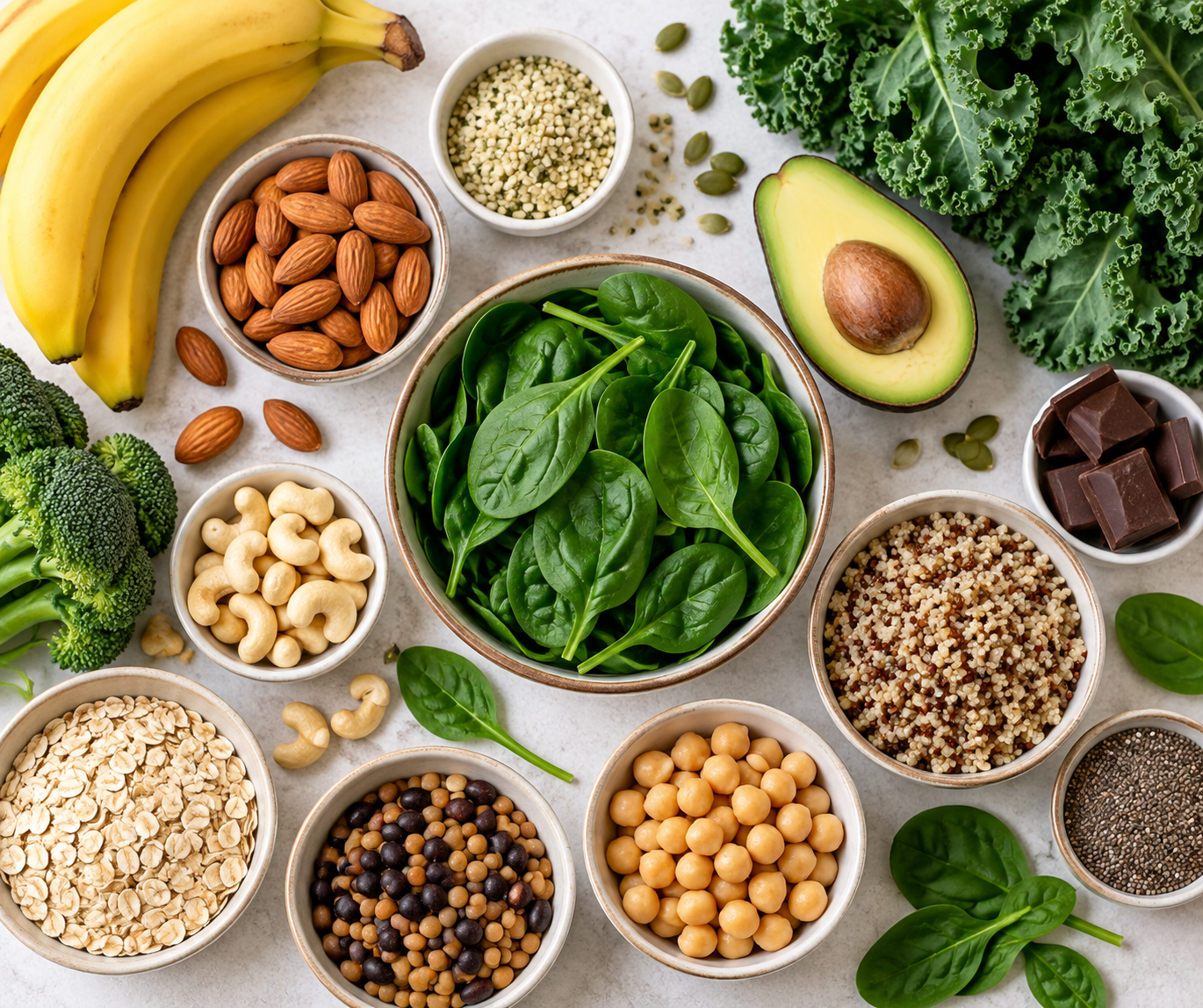
Before automatically reaching for a supplement, take a look at your plate. Magnesium is naturally found in many nutrient-dense foods, including spinach and other leafy greens, pumpkin seeds, almonds, cashews, beans, lentils, whole grains, avocado, dark chocolate, bananas, and fatty fish.
And you don't need to overhaul your diet.
Try adding spinach to eggs, tossing pumpkin seeds onto yogurt or a salad, choosing whole-grain bread, swapping white rice for quinoa or brown rice, or adding beans or lentils to a few meals each week. Small, repeatable changes can make nutritious eating much easier to maintain.
What About Magnesium Supplements?
Food-first doesn't mean supplements never have a place.
Different forms of magnesium are used for different purposes. Magnesium glycinate is commonly chosen for relaxation and sleep, while magnesium citrate is frequently used for digestive regularity. Magnesium L-threonate has also been studied for sleep and cognitive function.
But more isn't necessarily better. High supplemental doses can cause diarrhea, nausea, and stomach cramps, and supplements can be especially important to discuss with a healthcare professional if you take medications or manage a health condition.
A Better Approach: Build the Nutrients Into Your Meals
At Compass Nutrition, we believe nutrition should be practical, evidence-based, affordable, and personalized.
Instead of chasing one nutrient at a time, focus on building meals that naturally provide a range of nutrients your body needs. Foods like nuts, seeds, beans, whole grains and leafy greens can contribute magnesium while also providing protein, fiber, healthy fats, and other important nutrients.
Need an easy place to start?
Our 7-Day Protein Kickstart is just $3.99 and gives you seven days of protein-forward meals and snacks, simple recipes, a grocery list, and easy swaps to help take some of the guesswork out of eating well.
Explore the 7-Day Protein Kickstart →
And if you need guidance specific to your health, medications, symptoms, or nutrition goals, a registered dietitian can help you build a plan that fits your needs.
FAQ: Magnesium Questions
Can I get enough magnesium from food?
Many people can get meaningful amounts from foods such as leafy greens, nuts, seeds, legumes, and whole grains. Individual needs and circumstances vary.
What are common signs of low magnesium?
Possible signs include muscle cramps, fatigue, headaches, sleep difficulties and constipation, although these symptoms aren't specific to magnesium deficiency.
Which magnesium supplement is best for sleep?
Magnesium glycinate is commonly used for relaxation and sleep, while magnesium L-threonate has also been studied in adults with self-reported sleep problems.
Should I take magnesium every day?
Your body needs magnesium consistently, but that doesn't mean everyone needs a daily supplement. Magnesium can come from food, supplements, or both depending on individual needs.