
Reviewed by Adiana Castro, MS, RDN, CDN, LDN, CLT
Are You Eating Because You're Hungry—or Because It's Time?
Many people have lost touch with their body's natural hunger and fullness signals. Busy schedules, stress, dieting rules, and emotional eating can make it difficult to know when to eat and when to stop.
The Hunger Scale is a simple yet powerful tool that helps you reconnect with your body's cues and make eating decisions based on physical hunger rather than habit, boredom, or emotion.
Whether your goal is weight management, improving digestion, supporting GLP-1 medication use, or simply building a healthier relationship with food, learning to use the Hunger Scale can be a game changer.
What Is the Hunger Scale?
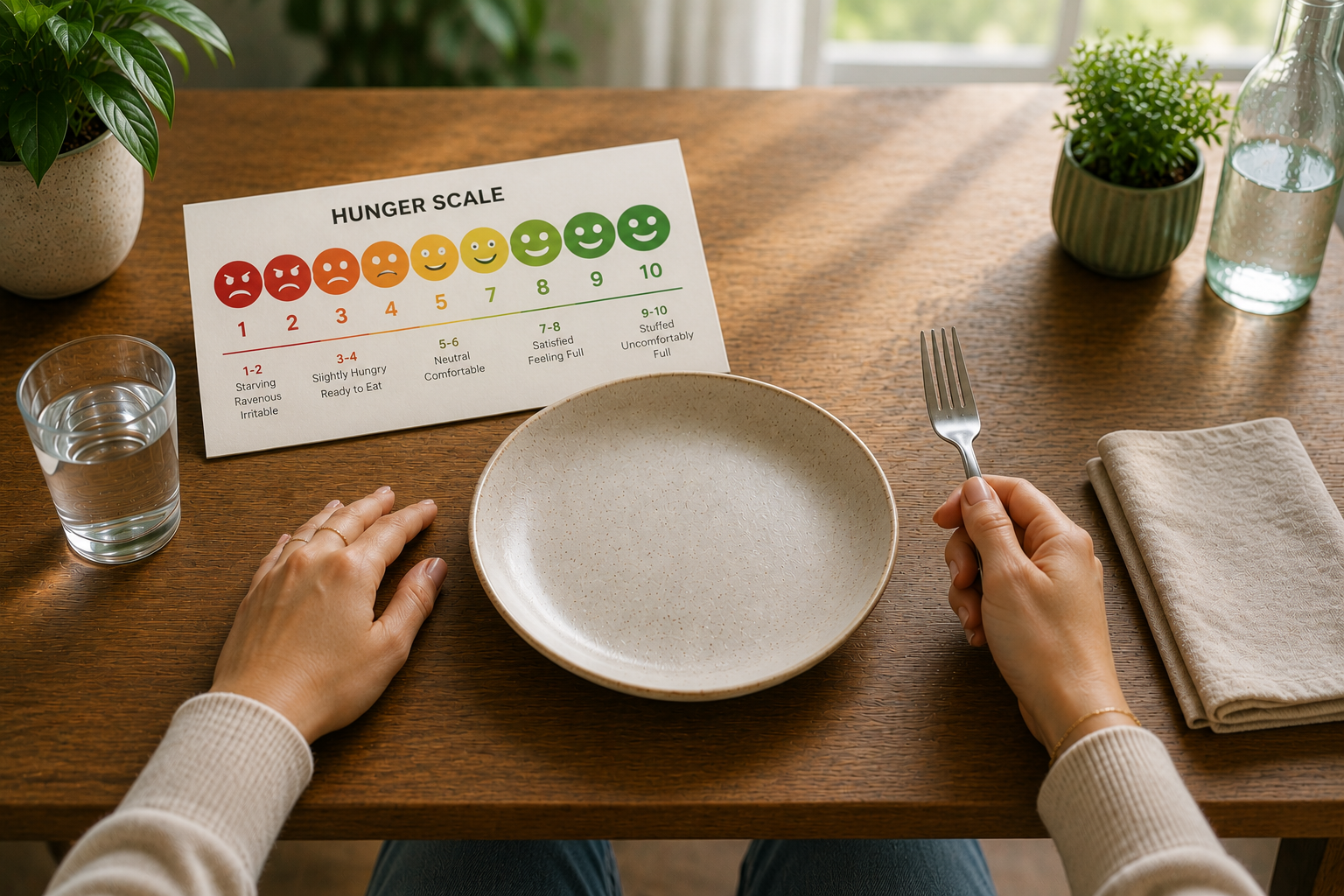
The Hunger Scale is a 1-to-10 rating system that helps you identify how hungry or full you feel before, during, and after eating.
Hunger Levels
1 – Starving
Feeling weak, dizzy, shaky, or lightheaded
Intense hunger
Difficult to focus
2 – Very Hungry
Irritable
Low energy
Significant stomach growling
3 – Pretty Hungry
Hunger is noticeable
Stomach beginning to growl
4 – Beginning to Feel Hungry
Early hunger signals appear
Ideal time to start planning a meal
5 – Neutral
Neither hungry nor full
Comfortable
Fullness Levels
6 – Slightly Full
Pleasantly satisfied
Comfortable after eating
7 – Moderately Full
Full but not uncomfortable
8 – Stuffed
Uncomfortable fullness begins
9 – Very Uncomfortably Full
Stomach aches
Overeating symptoms
10 – Too Full
Feeling sick
Extremely uncomfortable
The Sweet Spot: Aim for a 3 to 6
Most nutrition professionals encourage eating when you reach about a 3 or 4 and stopping around a 6 or 7.
Why?
When you wait until you're starving (1-2), you're more likely to:
Eat too quickly
Overeat
Make impulsive food choices
Experience blood sugar crashes
When you continue eating past comfortable fullness (8-10), you may experience:
Bloating
Heartburn
Fatigue
Digestive discomfort
The goal isn't perfection—it's awareness.
How the Hunger Scale Can Support Weight Management
Many people think successful weight management requires strict calorie counting or eliminating favorite foods.
In reality, one of the most effective skills you can develop is learning to trust your body's hunger and fullness signals.
Using the Hunger Scale can help you:
Reduce mindless snacking
Prevent overeating at meals
Improve portion awareness
Recognize emotional eating triggers
Feel more satisfied with meals
Over time, this awareness often leads to more consistent eating habits and a healthier relationship with food.
Using the Hunger Scale While Taking GLP-1 Medications
If you're taking medications such as Wegovy®, Zepbound®, Ozempic®, or Mounjaro®, the Hunger Scale can be especially helpful.
GLP-1 medications often reduce appetite and slow digestion, making it easier to miss hunger cues altogether.
Many patients find themselves:
Skipping meals unintentionally
Eating too little protein
Waiting until they feel weak or fatigued
Struggling to recognize fullness
Checking in with your Hunger Scale rating throughout the day can help ensure you're eating enough to support muscle mass, energy, hydration, and long-term success.
The Hunger Scale Is About Awareness, Not Perfection
Some days you'll eat when you're not hungry. Some days you'll become overly full.
That's normal.
The Hunger Scale isn't meant to judge your choices—it's a tool to help you become more aware of them.
The more often you check in with your hunger and fullness cues, the easier it becomes to build sustainable habits that support your health goals.
Need Help Reconnecting With Your Hunger and Fullness Signals?
If you've spent years dieting, struggling with emotional eating, or navigating appetite changes from GLP-1 medications, working with a registered dietitian can help.
At Compass Nutrition, our dietitians help patients develop sustainable eating habits, improve their relationship with food, and create personalized nutrition plans that fit real life.