
If you've ever worried about memory changes, brain fog, or keeping your mind sharp as you age, you're not alone.
While no single food can prevent cognitive decline, research suggests that certain eating patterns may help support long-term brain health. One of the most studied approaches is the MIND Diet.
The MIND Diet combines elements of the Mediterranean Diet and the DASH Diet (Dietary Approaches to Stop Hypertension). It was specifically designed to focus on foods that may help protect brain function and support healthy aging.
The good news? You don't need a complete diet overhaul to get started.
Here are the five pillars of the MIND Diet and simple ways to put them into practice.
1. Eat More Brain-Supportive Foods
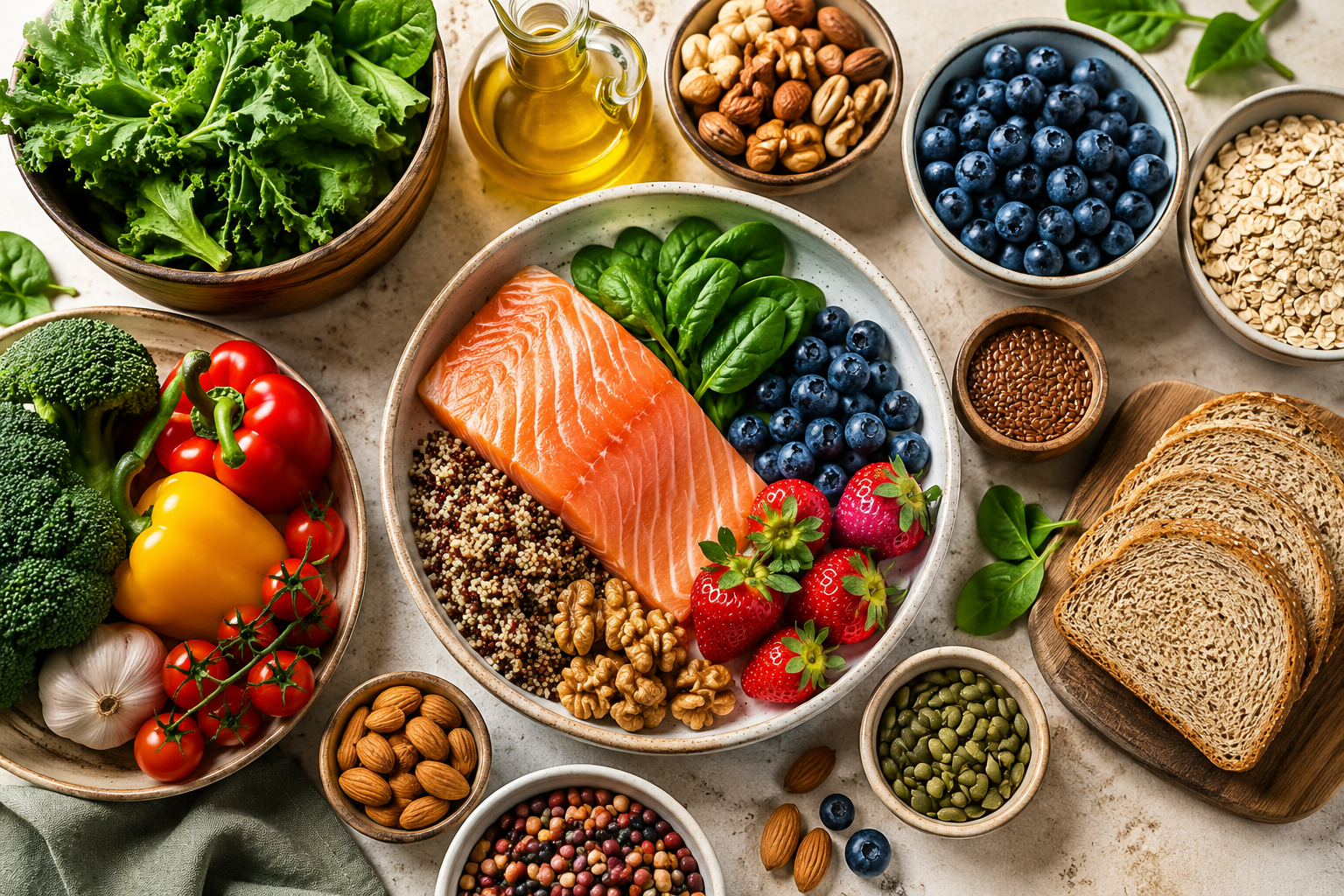
The MIND Diet emphasizes foods rich in fiber, antioxidants, vitamins, and plant compounds that may support cognitive health.
Key foods include:
Leafy greens like spinach, kale, and romaine lettuce
Other vegetables every day
Berries, especially blueberries and strawberries
Nuts
Whole grains such as oats, brown rice, and whole wheat bread
The goal is to make these foods regular staples rather than occasional additions.
Easy Ways to Start
Add spinach to your morning eggs
Keep blueberries in the freezer for smoothies
Swap white rice for brown rice a few times each week
Pack a handful of almonds for an afternoon snack
Feeling Overwhelmed by Healthy Eating?
Small changes can make a meaningful difference over time.
2. Choose Heart-Healthy Fats
What's good for your heart is often good for your brain.
The MIND Diet encourages replacing saturated fats with healthier fat sources, including:
Olive oil as your primary cooking oil
Fatty fish such as salmon and sardines at least once per week
These foods provide beneficial fats that may help support overall brain function and cardiovascular health.
Try This
Instead of cooking with butter, drizzle vegetables with olive oil before roasting. Aim to include salmon, trout, sardines, or another fatty fish in your meal plan each week.
3. Focus on Plant-Based Protein Sources
Protein is important, but the source matters.
The MIND Diet encourages plant-based protein options such as:
Beans
Lentils
Soy foods
Nuts
Seeds
These foods provide protein and fiber while typically containing less saturated fat than many animal-based protein sources.
Simple Swaps
Add black beans to tacos
Use lentils in soups and stews
Sprinkle pumpkin seeds on salads
Blend silken tofu into smoothies
4. Build Consistency, Not Perfection
One reason the MIND Diet is appealing is that it isn't about strict rules.
Instead, it focuses on eating more foods that support overall health and gradually making them part of your routine.
Rather than asking:
"What should I eliminate?"
Try asking:
"What can I add today that supports my brain and body?"
A handful of nuts, an extra serving of vegetables, or adding berries to breakfast are all meaningful steps.
5. Create a Long-Term Pattern
Brain health isn't built from one meal.
The greatest benefit comes from consistently choosing nutrient-rich foods over months and years.
Think of the MIND Diet as a lifestyle pattern rather than a temporary plan. Small habits repeated regularly often create the biggest long-term impact.
What Does a MIND Diet Day Look Like?
Breakfast
Oatmeal topped with blueberries and walnuts
Lunch
Mixed greens salad with olive oil vinaigrette
Grilled salmon
Whole grain crackers
Snack
Almonds and strawberries
Dinner
Lentil and vegetable soup
Side salad with olive oil dressing
Whole grain bread
The Bottom Line
The MIND Diet focuses on simple, evidence-informed habits that may help support long-term brain health. By emphasizing leafy greens, berries, nuts, whole grains, healthy fats, fish, and plant-based proteins, you can build a nutrition pattern that benefits both your brain and overall well-being.
You don't need to change everything overnight. Start with one small habit and build from there.
Ready to Create a Nutrition Plan That Fits Your Life?
Whether you're focused on healthy aging, heart health, weight management, or improving your relationship with food, Compass Nutrition can help.