
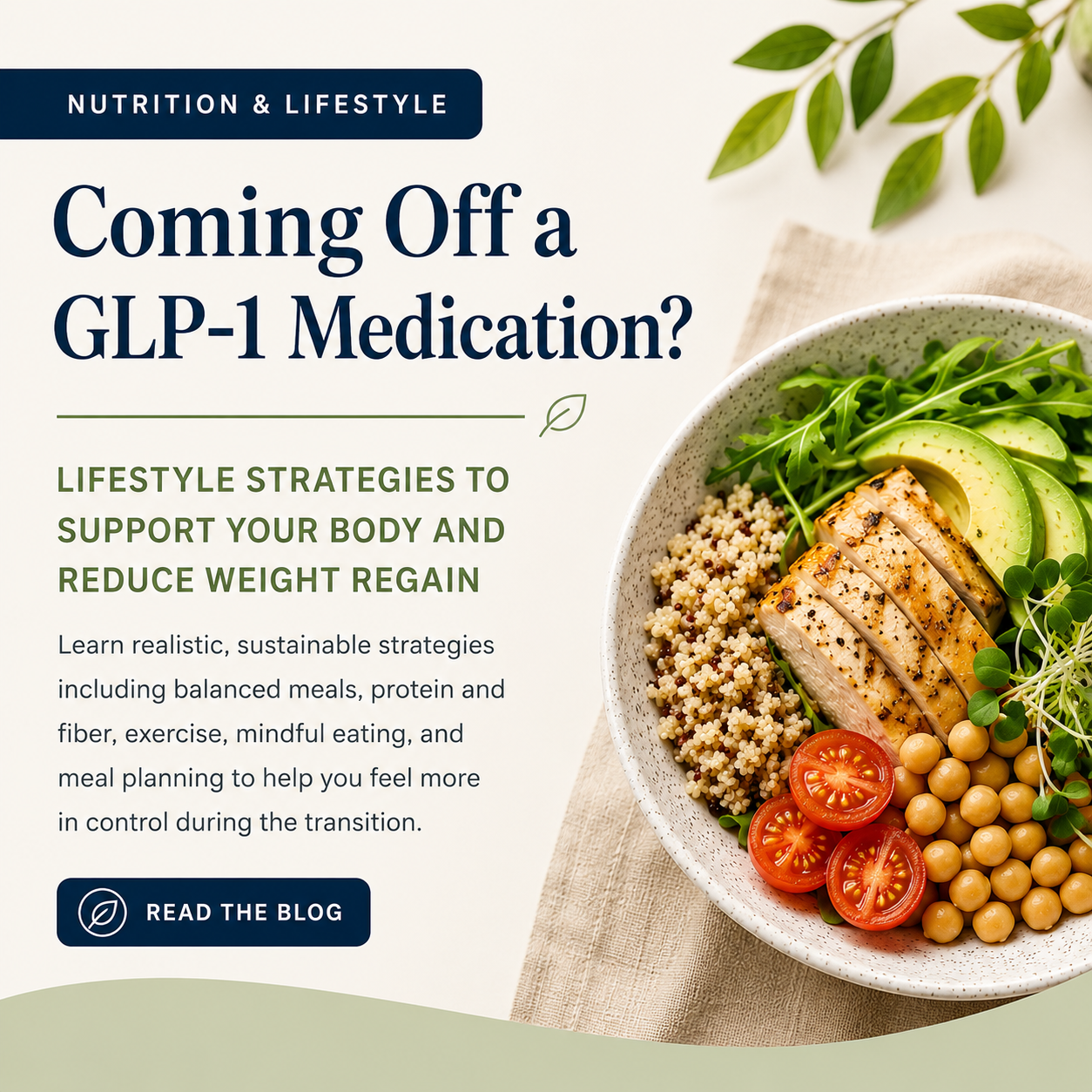
Stopping a GLP-1 medication like semaglutide or tirzepatide can feel overwhelming — especially if you’re worried about increased hunger, weight regain, or losing the progress you worked hard for.
The good news? You do not have to rely on perfection to support your health after stopping medication. Small, sustainable lifestyle habits can make a meaningful difference.
According to the attached educational handout, it’s common to experience increased appetite, reduced fullness, and some weight regain after stopping GLP-1 medications.
This article walks through realistic, relief-focused strategies that can help you feel more in control during the transition.
Why Appetite Changes After Stopping GLP-1 Medications
GLP-1 medications work in part by:
Reducing hunger signals
Slowing digestion
Helping you feel full sooner
After stopping the medication, your body may gradually return to its pre-medication hunger and fullness patterns.
That does not mean you failed.
It means your body is adjusting.
Many people notice:
Increased cravings
Feeling hungry more often
Larger portion sizes becoming easier to eat
Weight fluctuations
Changes in blood sugar or blood pressure markers
Understanding these changes ahead of time can help reduce guilt and panic during the transition.
Start With Support — Not Restriction
One of the most important things you can do after coming off a GLP-1 medication is build a support system.
The handout recommends working with:
Your physician for medication tapering guidance
A registered dietitian for nutrition support
A personal trainer or movement professional for exercise guidance
Trying to “white knuckle” your way through appetite changes often leads to burnout and frustration.
Instead, focus on building routines that feel realistic for your life.
Focus on Protein and Fiber at Meals
When appetite increases, balanced meals become even more important.
The handout recommends building meals with:
½ vegetables and fruits
¼ protein
¼ whole grains
Healthy fats in moderate portions
Protein and fiber can help you stay fuller longer and reduce the urge to constantly snack.
Easy Protein Ideas
Greek yogurt
Eggs
Chicken
Fish
Cottage cheese
Beans and lentils
Protein smoothies
Fiber-Rich Foods to Add More Often
Vegetables
Fruit
Oats
Whole grain bread
Beans
Nuts and seeds
A helpful strategy is spreading protein intake throughout the day instead of trying to eat it all at dinner.
Midday Energy Crashes and Constant Hunger? Start Here.
If you’re coming off a GLP-1 medication and struggling with hunger, energy, or meal ideas, personalized nutrition support can help you create a realistic plan that actually fits your lifestyle.
Compass Nutrition offers GLP-1 nutrition counseling focused on:
Reducing side effects
Maintaining muscle mass
Building balanced meals
Managing hunger naturally
Supporting long-term weight maintenance
Exercise Matters More Than You Think
Exercise is not just about burning calories.
Regular movement can help:
Support weight maintenance
Improve blood sugar regulation
Protect muscle mass
Improve mood and energy levels
The handout recommends:
150–300 minutes of moderate activity weekly
Muscle-strengthening activities at least 2 days per week
That may sound like a lot, but it can start small.
Examples:
20–30 minute walks
Strength training twice weekly
Swimming
Cycling
Dance workouts
Active play with family
Consistency matters more than intensity.
Mindful Eating Can Help You Reconnect With Hunger Cues
While on a GLP-1 medication, hunger signals may feel quieter or easier to manage.
After stopping the medication, many people feel surprised by how strong those signals become again.
The handout recommends mindful eating strategies such as:
Slowing down during meals
Paying attention to fullness cues
Finding satisfaction in meals and snacks
This is not about rigid food rules.
It’s about rebuilding trust with your body.
Meal Planning Helps Reduce “What Am I Going to Eat?” Stress
One underrated strategy after stopping GLP-1 medications is reducing decision fatigue.
Simple meal planning can help you:
Avoid skipping meals
Reduce impulsive eating
Keep balanced options available
Stay consistent during busy weeks
You do not need elaborate meal prep.
Even simple routines help:
Pre-cut vegetables
Protein prepared ahead of time
Easy freezer meals
Grab-and-go snacks
Grocery lists built around balanced meals
You Don’t Need Perfect Eating to Make Progress
Many people fear that coming off a GLP-1 medication means they will immediately regain all of the weight.
While some weight regain can happen, sustainable habits still matter.
The goal is not perfection.
The goal is creating a lifestyle that:
Supports your energy
Helps you feel satisfied
Protects your health
Feels realistic long term
Need Help Transitioning Off a GLP-1 Medication?
You do not have to figure this out alone.
At Compass Nutrition, we help patients create practical, personalized nutrition strategies that support long-term success — without restriction or overwhelm.
Whether you’re:
Preparing to stop a GLP-1 medication
Struggling with hunger returning
Trying to maintain weight loss
Looking to build sustainable habits
…we can help you create a plan that feels manageable and supportive.