
High triglycerides can feel overwhelming—especially when labs come back higher than expected.
The good news? You don’t need a complete diet overhaul to start improving your numbers.
Small, targeted nutrition changes can make a meaningful difference—and often quickly.
Why Triglycerides Matter
Triglycerides are a type of fat in your blood. When they’re elevated, your risk for heart disease and metabolic issues increases.
But here’s the part most people miss:
👉 Triglycerides are highly responsive to what you eat day-to-day
👉 Even modest changes can lower them
1. Start with Sugar (This Is the Biggest Lever)
If you only change one thing—make it this.
Too much added sugar is one of the fastest ways to raise triglycerides.
Common sources to watch:
Sweetened drinks (soda, sweet tea, energy drinks)
Desserts (cookies, candy, cakes)
Flavored yogurts and cereals
A simple target:
Women: ≤ 25g (6 teaspoons) per day
Men: ≤ 36g (9 teaspoons) per day
What this looks like in real life:
Swap sugary drinks for water, seltzer, or unsweetened tea—and you’ve already made a major impact.
2. Rethink Refined Carbs
White bread, white rice, and pasta may seem harmless—but they can spike blood sugar and push triglycerides higher.
Easy upgrades:
White bread → whole grain bread
White rice → brown rice or quinoa
Regular pasta → whole wheat pasta
You don’t need to cut carbs—just choose better ones.
3. Add (Don’t Just Remove) Healthy Fats
This is where many people get stuck—they focus only on restriction.
Instead, focus on replacing unhealthy fats with supportive ones.
Add more of:
Olive oil
Avocado
Nuts
Fatty fish (salmon, tuna, sardines—2x/week)
Limit:
Butter
Cream
Cheese
Red meat
Why this works:
Healthy fats help improve lipid balance and support heart health.
4. Be Careful with Alcohol
Even small amounts can raise triglycerides—sometimes significantly.
👉 If your levels are elevated, the most effective move is to pause alcohol completely (at least temporarily).
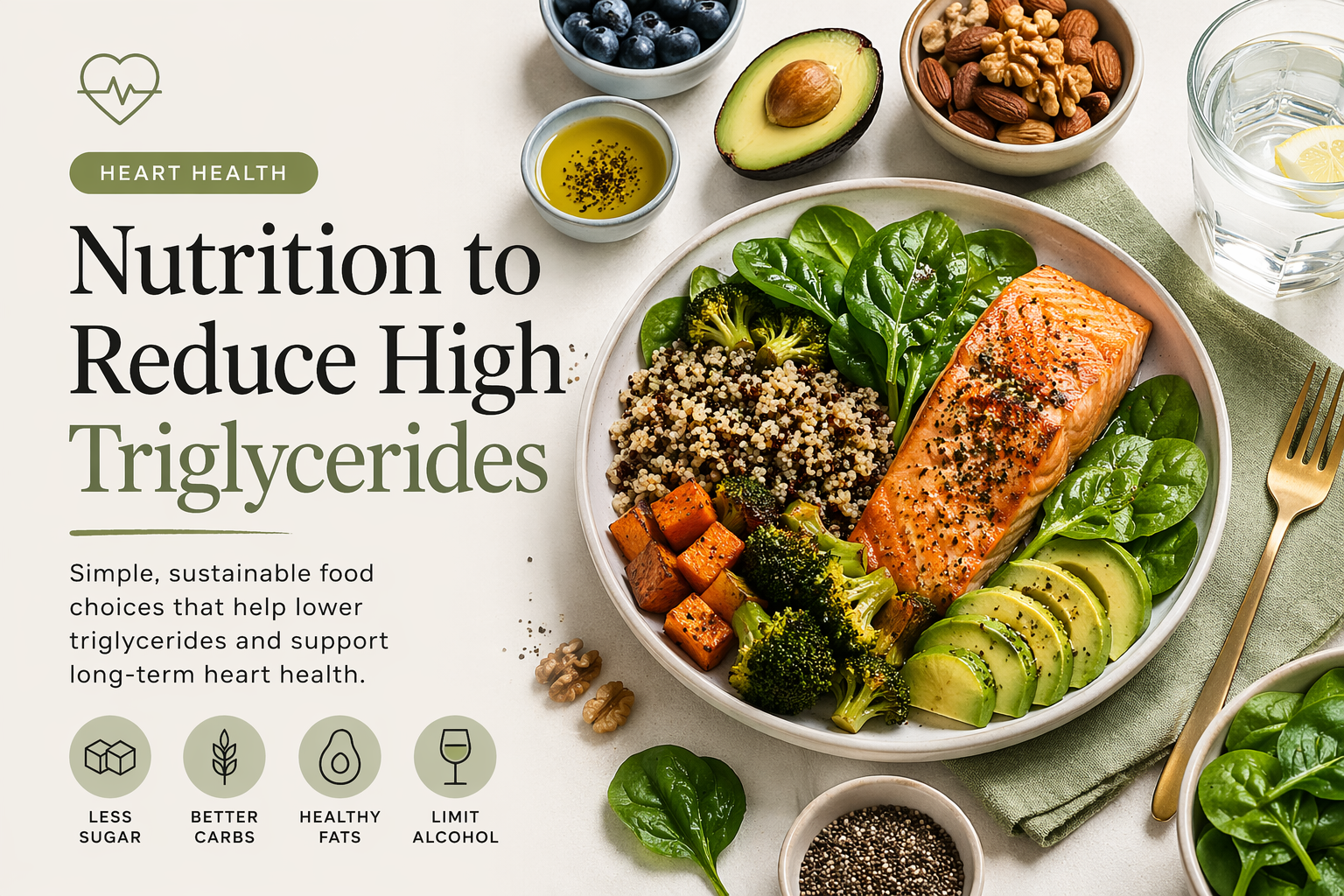
What This Looks Like on Your Plate
You don’t need perfection—just consistency.
A simple framework:
Protein: chicken, fish, eggs, beans
Fiber-rich carbs: whole grains, vegetables
Healthy fats: olive oil, avocado, nuts
This combination helps stabilize blood sugar and supports lower triglycerides.
When It Still Feels Confusing
If you’ve already tried to “eat better” but your labs aren’t improving, it may not be about willpower—it may be about precision.
Certain foods—even healthy ones—can still trigger inflammation or metabolic disruption in some people.
Stop guessing what’s working (and what’s not)
If your triglycerides aren’t improving despite your efforts, it may be time for a more targeted approach.
→ Get clarity with personalized nutrition support
We help you identify what’s actually driving your numbers—and create a plan that feels realistic to follow.
The Bottom Line
Lowering triglycerides doesn’t require extreme dieting.
It comes down to a few high-impact shifts:
Reduce added sugar
Upgrade your carbs
Add healthy fats
Limit alcohol
Start with one change—and build from there.
Want a plan that actually moves your numbers?
If you’re ready for a clear, personalized strategy (without restriction or overwhelm):
→ Start your Nutrition Check-Up
Or explore targeted testing options to take the guesswork out of your nutrition.