
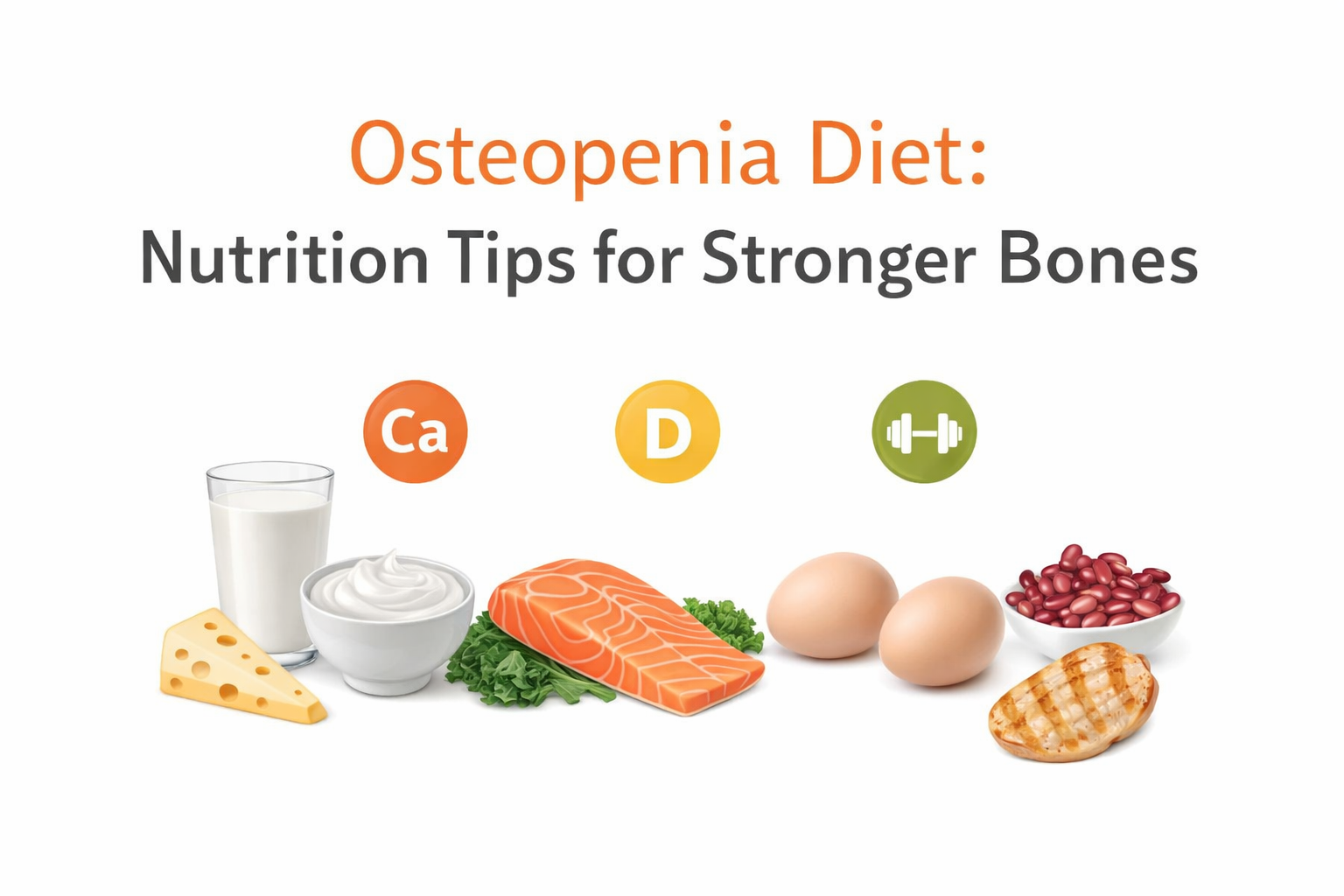
If you’ve been told you have osteopenia or osteoporosis, it can feel unsettling.
Many people immediately worry about fractures, medications, or whether their bones will keep getting weaker.
The good news: nutrition plays a powerful role in protecting bone strength.
Small daily habits — especially around calcium, vitamin D, protein, and key minerals — can help support stronger bones over time.
Want guidance on what to eat to support bone health?
👉 Schedule a Nutrition Session
What Osteopenia and Osteoporosis Really Mean
Both conditions mean bones are less dense and more fragile than normal.
Osteopenia
Bone density is lower than ideal
Often considered an early warning stage
Osteoporosis
Bones become significantly weaker
Fracture risk increases
These changes happen when bones lose minerals such as calcium, which reduces their strength.
The Nutrients Your Bones Depend On
Strong bones rely on a few key nutrients working together.
Calcium
Calcium is the primary mineral found in bone tissue.
Most adults need 1,000–1,200 mg daily, and needs often increase after age 50.
Good sources include:
Milk, yogurt, cheese
Fortified plant milks
Tofu made with calcium
Sardines or canned salmon with bones
Leafy greens like kale and bok choy
Vitamin D
Vitamin D helps your body absorb calcium effectively.
Adults typically need 600–800 IU daily, though some people require more depending on blood levels.
Sources include:
Sunlight exposure
Salmon or mackerel
Fortified dairy or plant milk
Supplements when recommended by a provider
Protein
Protein supports bone tissue and muscle strength, both important for preventing fractures.
Include protein regularly from:
Lean meats and fish
Eggs
Beans and lentils
Tofu
Dairy products
Magnesium and Potassium
These minerals help support bone metabolism and reduce calcium loss.
Foods rich in these nutrients include:
Nuts and seeds
Whole grains
Beans
Spinach and leafy greens
Bananas and sweet potatoes
Simple Daily Habits That Support Bone Health
Nutrition doesn’t need to be complicated. A few habits make a big difference.
Try to:
• Eat three calcium-rich foods daily
• Include protein at each meal
• Add leafy greens and colorful vegetables
• Limit salty processed foods
• Reduce excess soda and caffeine
• Stay well hydrated
Sometimes diet alone may not meet your needs, and a provider may recommend calcium or vitamin D supplements.
Movement Matters Too
Nutrition works best when paired with weight-bearing activity.
Activities like walking, dancing, and strength training help stimulate bone tissue and maintain strength over time.
The Bottom Line
Bone health isn’t determined by one food or one nutrient.
Instead, it’s built through consistent daily choices that support mineral intake, muscle strength, and overall nutrition.
The earlier you address bone health, the more impact nutrition can have.