
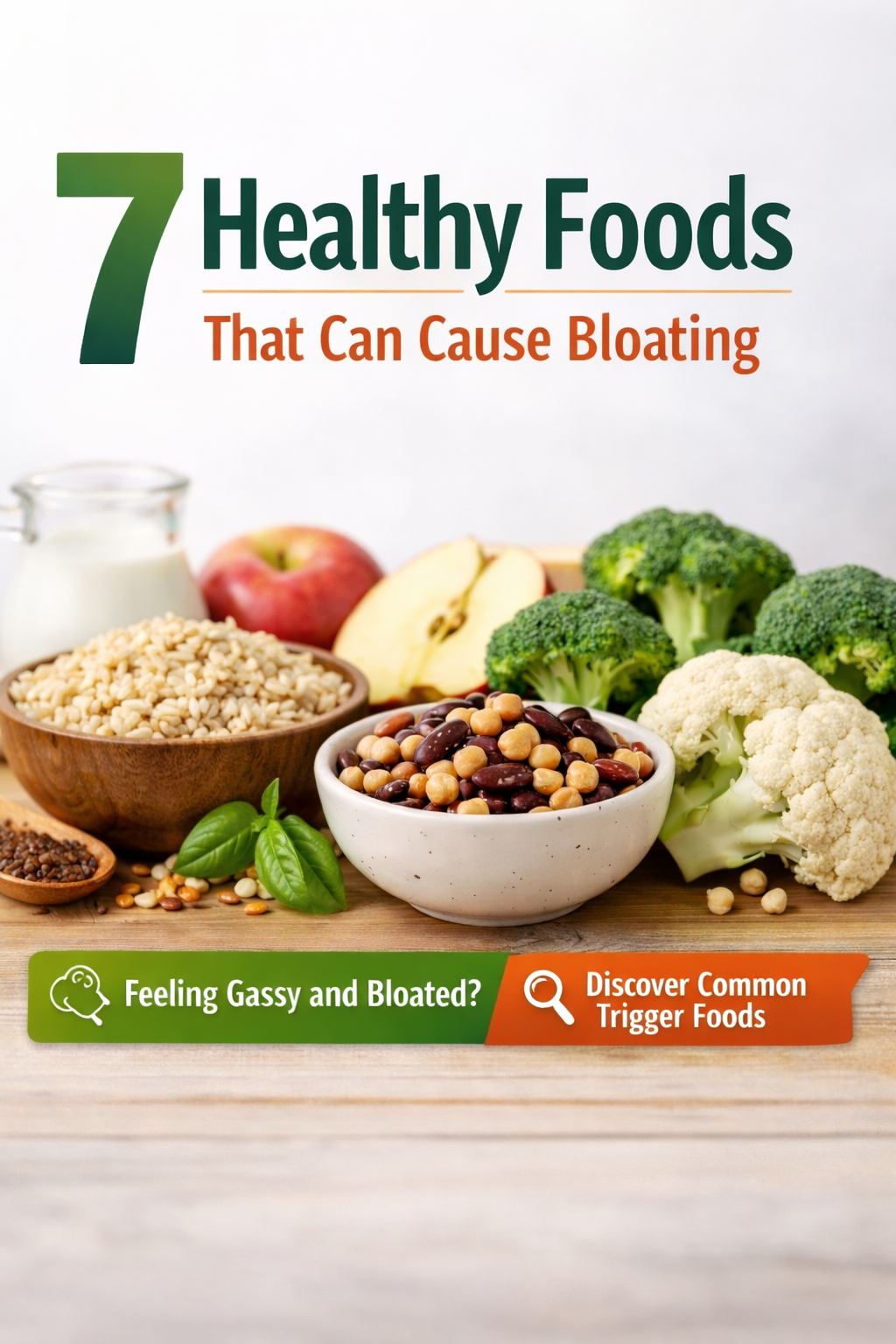
Eating healthy foods like vegetables, fruits, whole grains, and beans is great for your body. But sometimes these foods can also cause bloating.
This happens because many nutritious foods contain fiber and fermentable carbohydrates that gut bacteria break down during digestion. That fermentation process can produce gas, leading to symptoms like bloating, fullness, or mild discomfort.
The good news: this doesn’t mean these foods are bad. It simply means your digestive system may need portion adjustments or better food timing.
1. Beans and Lentils
Beans, chickpeas, and lentils are rich in fiber and plant protein, but they also contain fermentable carbohydrates that can produce gas during digestion.
Tip: start with smaller portions and increase gradually.
2. Broccoli and Cauliflower
Cruciferous vegetables contain sulfur compounds and fibers that can be harder for some people to digest.
Tip: cooked vegetables are often easier to tolerate than raw.
3. Whole Grains
Foods like oats, barley, and whole wheat provide important nutrients, but increasing fiber too quickly can cause bloating.
Tip: increase fiber slowly and drink plenty of water.
4. Onions and Garlic
These flavorful ingredients contain fermentable carbohydrates that can contribute to gas production in some people.
Cooking them thoroughly may help improve tolerance.
5. Apples and Pears
These fruits contain natural sugars and fibers that ferment in the gut, especially when eaten in larger portions.
🌿 Trying to Identify Your Trigger Foods?
Even healthy foods can cause digestive symptoms if they don’t work well with your body.
Our dietitians help clients identify patterns, adjust food choices, and build eating strategies that support easier digestion.
6. Dairy Products
Milk, yogurt, and soft cheeses may cause bloating for people who have difficulty digesting lactose.
Lactose-free options may help reduce symptoms.
7. Large Portions of High-Fiber Foods
Even healthy foods can cause bloating when eaten in very large amounts. Your digestive system often needs time to adapt to higher fiber intake.
How to Reduce Bloating From Healthy Foods
A few simple strategies may help:
• Increase fiber gradually
• Choose cooked vegetables when possible
• Watch portion sizes
• Stay well hydrated
• Track foods that trigger symptoms
The Bottom Line
Healthy foods support long-term wellness, but digestion varies from person to person. If certain foods leave you feeling bloated, adjusting portions, preparation methods, or meal patterns may help improve comfort.
Learning how your body responds to different foods can help you build a nutrition plan that supports both digestive comfort and overall health.