
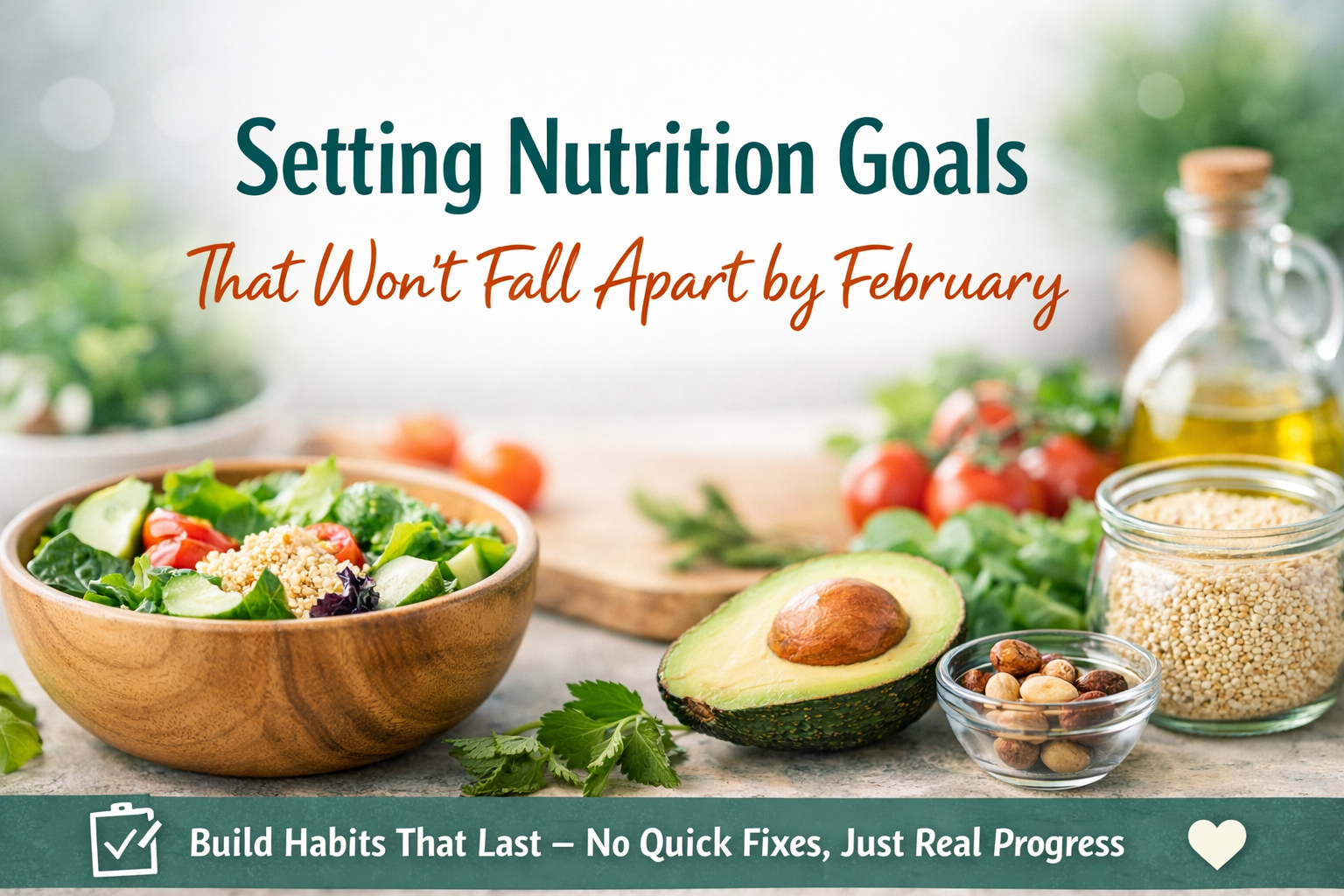
Every January, I see the same pattern play out.
Motivation is high. Grocery carts are full of good intentions. Schedules look neat and organized—at least on paper. And then real life happens.
By February, many people feel frustrated, behind, or convinced they “just can’t stick to it.” Not because they lack discipline—but because the goals themselves were never designed to work in real life.
This year, I want to offer a different approach.
Instead of chasing “New Year, New Me” energy, let’s focus on nutrition goals that are realistic, flexible, and supportive enough to last. The kind that work with your body, your schedule, and your actual life—not against it.
No perfection required. Just intention, structure, and consistency.
Reflect Before You Reset
Before setting new nutrition or wellness goals, it helps to pause and take stock of what’s already happening.
Most people skip this step. They jump straight into changing everything at once—only to feel overwhelmed a few weeks later.
Reflection helps you:
Identify habits that already are working
Notice patterns that make eating harder
Set goals that actually match your lifestyle
Ask yourself:
When did eating feel easiest last year?
What habits gave me more energy—or less?
What kept getting in the way?
How do I want to feel in my body this year?
This isn’t about judging past choices. It’s about understanding them—so your goals are built on reality, not comparison or pressure.
Choose Nutrition Goals That Add Support (Not Restriction)
Sustainable nutrition goals rarely come from cutting everything out. They come from adding in structure, nourishment, and awareness.
Here are a few areas I often see work well with clients—use them as inspiration, not a checklist.
Mindful Eating (Without Making It Complicated)
Mindful eating doesn’t mean eating perfectly or slowly every time. It means being present some of the time.
That might look like:
Eating one meal per day without screens
Sitting down instead of eating on the run
Checking in with hunger and fullness cues
These small shifts often reduce stress eating and improve satisfaction—without rules or guilt.
Build Balanced Meals Starting With Plants
Instead of overthinking macros, start with fruits and vegetables.
Not fresh-only. Frozen and canned count.
A simple anchor:
Half your plate from fruits and vegetables
Protein for fullness
Carbs for energy
Fat for satisfaction
Balance doesn’t require perfection—it requires consistency.
Rethink Sugary Drinks (Gently)
Sugary drinks tend to sneak in without us noticing. Coffee drinks, sodas, juices, sports drinks—they add up quickly.
Rather than eliminating them completely, consider:
Swapping one drink per day
Alternating with water or unsweetened tea
Paying attention to how certain drinks affect your energy
Small changes here often have an outsized impact.
Don’t Ignore Sleep
If nutrition goals feel hard no matter what you try, sleep may be part of the picture.
Poor sleep affects:
Appetite regulation
Food cravings
Planning and follow-through
Nutrition and sleep support each other. Sometimes improving one makes the other easier—without adding another goal.
Turn Intentions Into SMART Nutrition Goals
Big goals feel inspiring—but vague goals are hard to follow.
That’s where SMART goals come in:
Specific
Measurable
Achievable
Relevant
Time-bound
Instead of:
“I want to eat better.”
Try:
“I will prepare a balanced lunch at home three days per week for the next two weeks and reassess how it feels.”
This keeps the goal:
Clear
Flexible
Easy to adjust
SMART goals help you build momentum without burnout.
Your Environment Matters More Than Motivation
Willpower fades. Environment stays.
A few small changes can make nutrition goals easier:
Keep washed produce visible
Prep ingredients—not full meals
Clear a space where you can actually sit and eat
Talk with family or roommates about support
Your calendar, kitchen, and even self-talk are all part of your nutrition environment.
Let Go of Perfection—Track Progress Instead
Nutrition goals don’t fail because of “off days.” They fail when people believe those days erase progress.
They don’t.
Missed meals, busy weeks, or low-energy days are normal. What matters is returning—without punishment.
Celebrate small wins:
One balanced meal
One mindful moment
One intentional choice
Consistency beats intensity every time.
Putting It All Together
If you want nutrition goals that last past January, focus on:
Reflection before change
Goals that add support—not restriction
Small, SMART steps
An environment that works for you
Flexibility instead of perfection
And remember—you don’t have to figure this out alone.
✨ Digital Resource: Build a Realistic Nutrition Foundation
Build habits that last—starting in your kitchen
If you want nutrition goals that actually stick, having structure at mealtime makes all the difference.
The Compass Nutrition Kitchen gives you practical, flexible tools to:
Build balanced meals without overthinking
Reduce decision fatigue during busy weeks
Create routines that support energy, digestion, and consistency
This isn’t a meal plan or a reset—it’s a framework you can use all year long.
🤝 Ready for Personalized Support?
If you want individualized guidance, accountability, and a plan built for your life:
👉 Schedule a nutrition appointment with Compass Nutrition
Together, we’ll create goals that feel doable, supportive, and sustainable—long after February.
Here’s to a year where nutrition goals actually stick.