
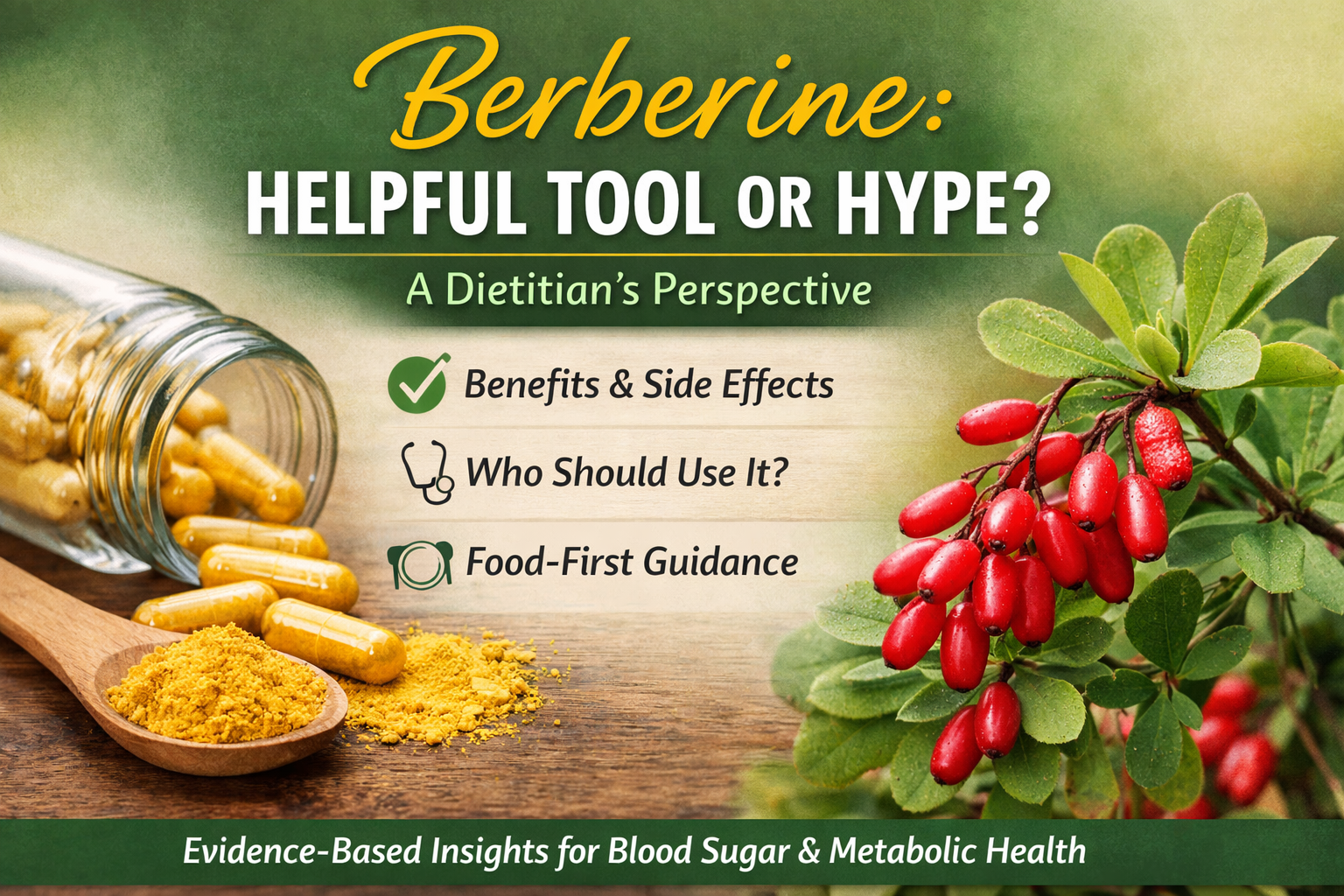
If you’ve been hearing more about berberine, you’re not alone. It’s often called “nature’s metformin” on social media—but the real story is more nuanced (and much more useful when applied correctly).
Let’s break it down without the overwhelm.
What is berberine, really?
Berberine is a plant compound found in herbs like barberry and goldenseal. It’s been used for centuries in traditional medicine and is now commonly sold as a supplement.
What makes it interesting is how it works: berberine helps the body use sugar and fat more efficiently by activating pathways involved in energy and blood sugar regulation
Potential benefits (when it’s appropriate)
With professional guidance, berberine may support:
Blood sugar balance and insulin sensitivity
Cholesterol and triglyceride management
Metabolic health and modest weight support
Digestive and gut health, thanks to antibacterial and anti-inflammatory effects
This is why it sometimes shows up in conversations around prediabetes, metabolic syndrome, or GLP-1 nutrition support.
Important caveat: this is not a DIY supplement
This is the part social media often skips.
Berberine can interact with medications, including diabetes drugs, blood pressure meds, and blood thinners. It’s also not recommended during pregnancy, breastfeeding, or for children. Some people experience GI side effects or low blood sugar—especially when stacking it with other treatments.
In other words: more is not better, and timing matters.
My dietitian perspective
Berberine isn’t a magic fix—but it can be a useful tool when paired with the right nutrition strategy. I see the best outcomes when supplements are:
Used short-term or strategically
Matched to the person’s labs, symptoms, and medications
Supported by adequate protein, fiber, and consistent meals
That’s where most people need guidance—not another bottle in the cabinet.
👉 Prefer a clear, food-first approach?
If you want support for blood sugar and metabolic health without supplement confusion, check out The Compass Nutrition Kitchen—a practical digital guide focused on balanced meals, blood sugar-friendly patterns, and sustainable habits you can actually keep up with.
Browse the guide in our shop
👉 Want personalized support?
If you’re considering berberine (or already taking it) and want to be sure it fits your health picture, working 1:1 with a dietitian can help you avoid guesswork.
Let’s Figure This Out Personalized 1:1 nutrition support.