
Reviewed by Adiana Castro, MS, RDN, CDN, LDN, CLT
If you have IBS or digestive issues, you’ve probably heard about prebiotics and probiotics. You may have even started seeing the term postbiotics.
They all play a role in gut health—but they do different things.
Your gut contains trillions of bacteria that make up your gut microbiome. These bacteria support digestion, immune health, and bowel regularity. Changes in the microbiome may also contribute to IBS symptoms such as bloating, gas, diarrhea, constipation, and abdominal pain.
Prebiotics: Food for Your Gut Bacteria
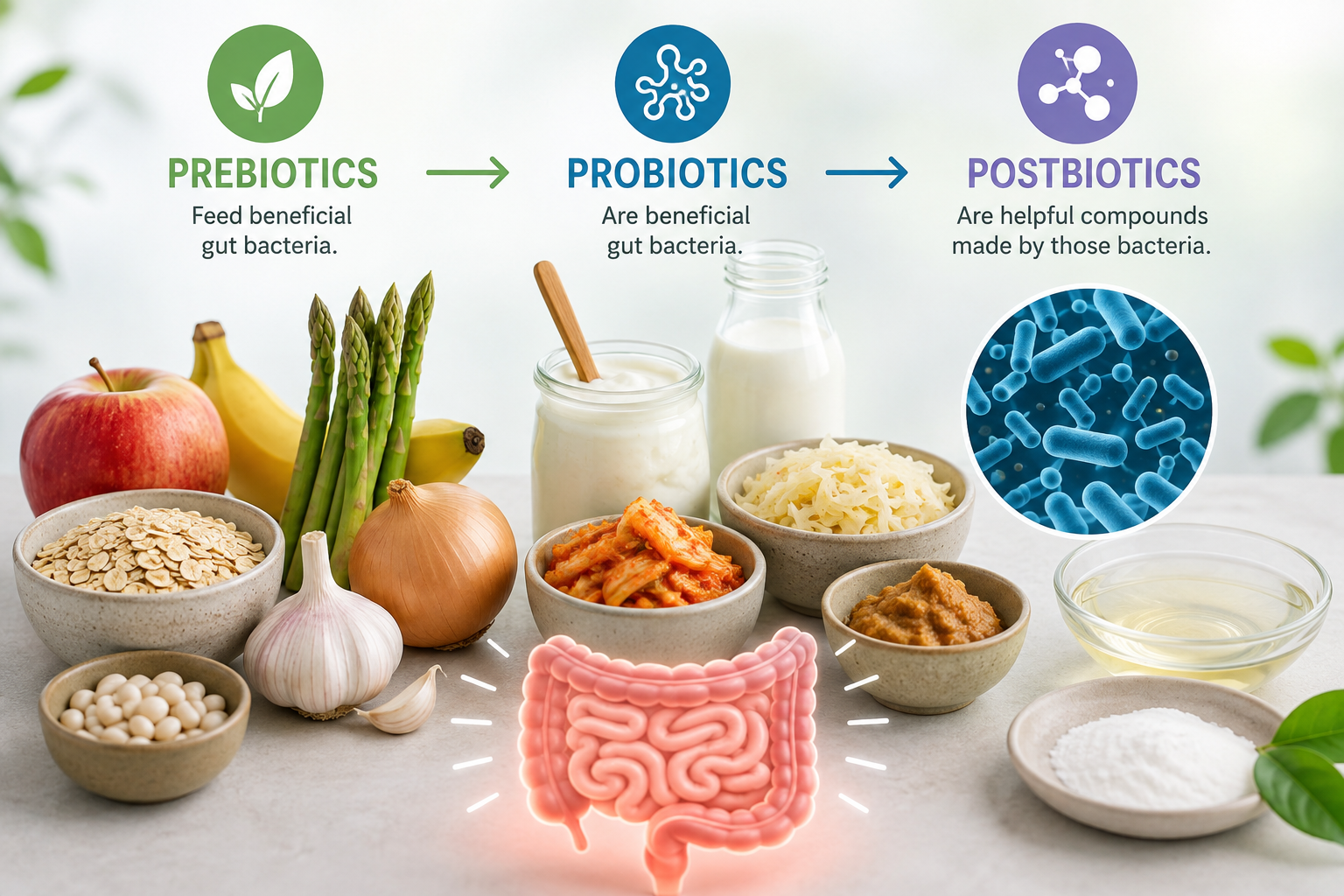
Prebiotics are fibers that feed beneficial gut bacteria.
Common sources include:
Apples and bananas
Oats
Asparagus
Garlic and onions
Beans and lentils
If you have IBS: Some prebiotic foods, particularly garlic, onions, beans, and lentils, are high in FODMAPs and may trigger gas or bloating.
Probiotics: Beneficial Bacteria
Probiotics are live microorganisms that help support a healthy gut microbiome.
Food sources include yogurt with live cultures, kefir, sauerkraut, kimchi, miso, and tempeh.
If you have IBS: Some people may notice improvements in bloating, gas, or irregular bowel habits. However, current guidelines don't recommend probiotics as a general treatment for IBS because evidence is still limited.
Postbiotics: What Gut Bacteria Produce
Postbiotics are beneficial compounds produced when gut bacteria digest fiber.
Examples include short-chain fatty acids, enzymes, and peptides. Research into postbiotics and IBS is still emerging, so more studies are needed.
An Easy Way to Remember
Prebiotics → Feed beneficial gut bacteria
Probiotics → Are beneficial gut bacteria
Postbiotics → Are helpful compounds made by those bacteria
Trying Prebiotics or Probiotics With IBS?
Gut health isn't one-size-fits-all. A food that's considered “gut healthy” can still trigger symptoms for someone with IBS.
A few tips:
Start low and go slow.
Make one change at a time.
Track symptoms like bloating, pain, and bowel habits.
Give probiotics time. Some people try one for 4–8 weeks before deciding if it helps.
Check the label. Look for the probiotic strain, dose, and expiration date.
The Bottom Line
Prebiotics, probiotics, and postbiotics can all support the gut microbiome—but more isn't necessarily better, especially when you have IBS.
Finding the right foods and strategies depends on your symptoms and individual tolerance.
Struggling with IBS, bloating, constipation, diarrhea, or other digestive symptoms? A Registered Dietitian Nutritionist at Compass Nutrition can help you identify triggers and create a personalized nutrition plan that supports your gut without unnecessary food restrictions.