
If you’ve been feeling low energy, dealing with brain fog, or just trying to support overall health—folate might be one of the simplest places to start.
What is folate?
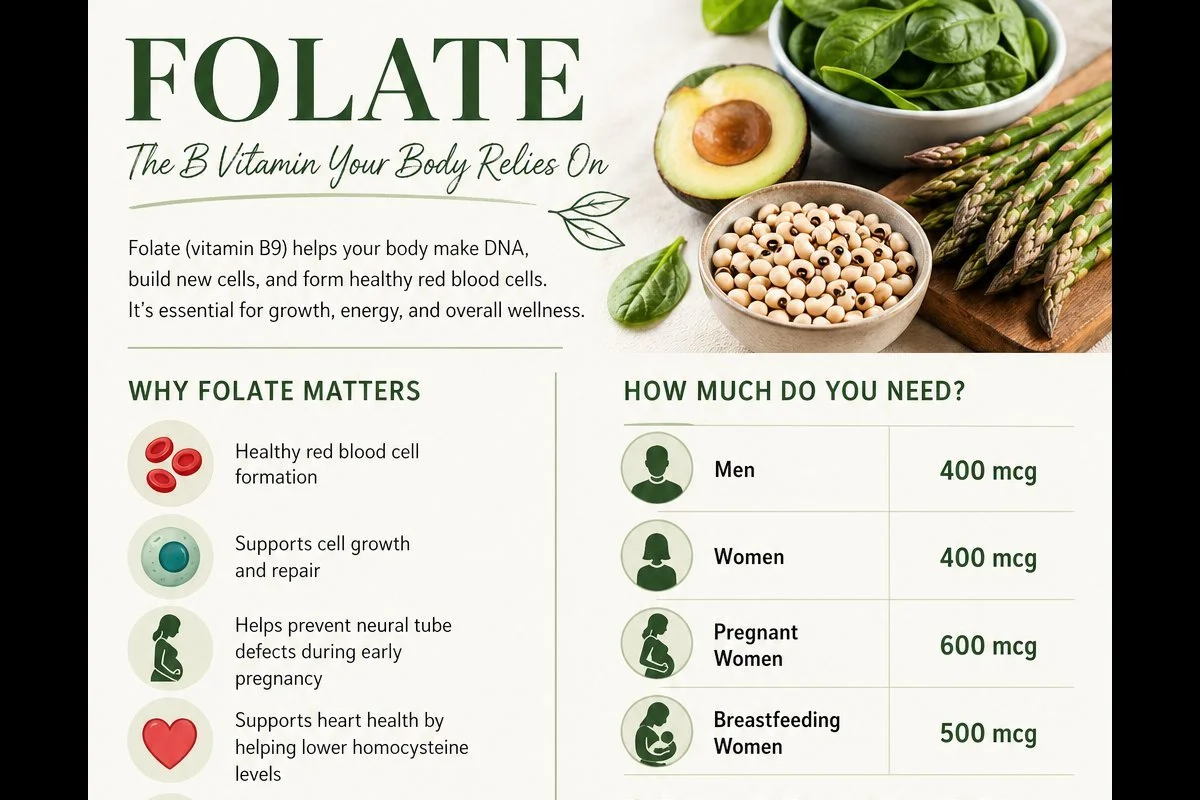
Folate is a B-vitamin (B9) your body uses to make DNA and build new cells. It’s especially important during periods of growth (like pregnancy), but it matters for everyone every day.
You’ll see it in two forms:
Folate = naturally found in food
Folic acid = synthetic form in supplements and fortified foods (absorbed more easily)
Why folate actually matters (beyond the textbook)
Getting enough folate daily supports:
Healthy red blood cells (think: energy, oxygen flow)
Cell repair and growth
Heart health (by helping lower homocysteine levels)
Brain health and mood
Early pregnancy development (critical for neural tube formation)
👉 Translation: folate is foundational—not flashy, but essential.
How much do you need?
Most adults need about:
400 mcg daily
600 mcg if pregnant
500 mcg if breastfeeding
You don’t need to track this perfectly—but it helps to know if you’re consistently far below it.
Not sure if your diet is actually meeting your needs?
👉 Start with a quick, personalized nutrition check-up and get clear on what your body may be missing—without guesswork.
Easy ways to get more folate (real food first)
You don’t need a complicated plan—just layer these in:
Spinach (½ cup cooked) → ~131 mcg
Black-eyed peas (½ cup) → ~105 mcg
Asparagus (4 spears) → ~89 mcg
Avocado (½) → ~59 mcg
Romaine lettuce (1 cup) → ~64 mcg
Fortified cereals → 100–400 mcg depending on brand
Simple strategy:
Add one folate-rich food to 1–2 meals per day. That alone gets you close.
Can you get too much?
From food alone—very unlikely.
But high-dose folic acid (from supplements or heavily fortified foods) can mask a vitamin B12 deficiency, which is something you don’t want to miss.
Bottom line:
Food = safe and preferred
Supplements = helpful when needed, but intentional
The takeaway
Folate isn’t something you need to obsess over—but it’s also not something to ignore.
If your diet is inconsistent, low in greens/legumes, or you’re dealing with fatigue, mood changes, or specific health goals—this is one of the first places worth tightening up.
Want a clearer picture of what your body may need?
A nutrition session can help you build a realistic plan based on your symptoms, labs, food habits, and goals.