

Reviewed by Adiana Castro, MS, RDN, CDN, LDN, CLT
Greek yogurt is a nutrient-rich food that provides protein, essential vitamins and minerals, and potentially beneficial probiotics. It can support a balanced eating pattern, help promote fullness, and offer a convenient way to add protein to meals and snacks.
But is Greek yogurt healthier than regular yogurt? Does it help with weight management? And what should you look for when buying it?
At Compass Nutrition, our registered dietitians help individuals make informed food choices based on their health goals, preferences, and nutritional needs.
Here's what you should know about Greek yogurt and its potential health benefits.
What Is Greek Yogurt?
Greek yogurt is a type of yogurt that undergoes an additional straining process to remove some of the liquid whey.
This process produces a thicker, creamier texture and concentrates certain nutrients, particularly protein.
Compared with regular yogurt, Greek yogurt generally contains more protein per serving, although its exact nutritional composition varies by brand.
What Are the Health Benefits of Greek Yogurt?
Greek yogurt offers several nutritional advantages, including protein for muscle maintenance, nutrients that support bone health, and potentially beneficial live bacterial cultures.
1. Greek Yogurt Is an Excellent Source of Protein
Greek yogurt typically contains approximately 15–20 grams of protein per serving, depending on the product and serving size.
Protein plays an important role in:
Maintaining and repairing muscle tissue
Supporting normal bodily functions
Promoting fullness after meals
Helping meet daily protein requirements
Greek yogurt can be particularly convenient for individuals looking to increase their protein intake without extensive meal preparation.
2. Greek Yogurt May Help Support Weight Management
Greek yogurt can be a useful addition to a weight-management eating plan because its protein content helps promote satiety, or the feeling of fullness after eating.
A satisfying snack that includes protein may help individuals manage hunger between meals.
However, Greek yogurt alone does not cause weight loss. Sustainable weight management depends on overall dietary patterns, physical activity, and individual health factors.
For personalized support, explore Weight Management Nutrition Counseling at Compass Nutrition.
3. Greek Yogurt Provides Nutrients That Support Bone Health
Greek yogurt contains several nutrients involved in maintaining healthy bones, including:
Calcium: Supports bone and tooth structure
Phosphorus: Works with calcium in bone mineralization
Magnesium: Contributes to normal bone function
Vitamin B12: Supports nerve function and healthy red blood cell production
Some Greek yogurts are also fortified with vitamin D, which supports calcium absorption.
Importantly, Greek yogurt may contain less calcium than regular yogurt because some calcium is removed during straining. Comparing Nutrition Facts labels can help you choose an appropriate option.
4. Greek Yogurt May Support Gut Health
Many Greek yogurts contain live bacterial cultures, commonly referred to as probiotics.
Certain probiotic strains may support digestive health and help maintain a balanced gut microbiome.
However, not all Greek yogurts contain the same bacterial strains or amounts, and not every live culture has a demonstrated probiotic benefit.
What should you look for?
Choose Greek yogurt labeled "live and active cultures" if including live cultures is important to you.
5. Greek Yogurt May Be Easier to Digest for People With Lactose Intolerance
Greek yogurt often contains less lactose than regular yogurt because some lactose is removed during straining.
Additionally, live yogurt cultures can help break down lactose.
As a result, some individuals with lactose intolerance may tolerate Greek yogurt better than regular yogurt.
Important: Greek yogurt is not necessarily lactose-free, and tolerance varies by individual. It is also not suitable for people with a milk protein allergy.
6. Greek Yogurt Can Help Make Meals More Satisfying
Greek yogurt combines easily with foods that provide fiber, carbohydrates, and healthy fats.
For example, combining plain Greek yogurt with berries and walnuts creates a snack containing:
Protein from Greek yogurt
Fiber and carbohydrates from berries
Unsaturated fats from walnuts
This combination offers a more nutritionally varied snack than Greek yogurt alone.
7. Greek Yogurt Is Versatile and Easy to Include in Your Diet
One of Greek yogurt's biggest advantages is its versatility.
You can use it in sweet or savory dishes without complicated preparation.
Try Greek yogurt:
With fresh fruit, nuts, seeds, or whole-grain cereal
Blended into a smoothie
Mixed with herbs for a creamy vegetable dip
As a base for homemade salad dressing
Stirred into overnight oats
As a substitute for sour cream in many recipes
Frozen with fruit to create yogurt bark
Is Greek Yogurt Healthier Than Regular Yogurt?
Greek yogurt is generally higher in protein than regular yogurt, but neither is automatically healthier for everyone.
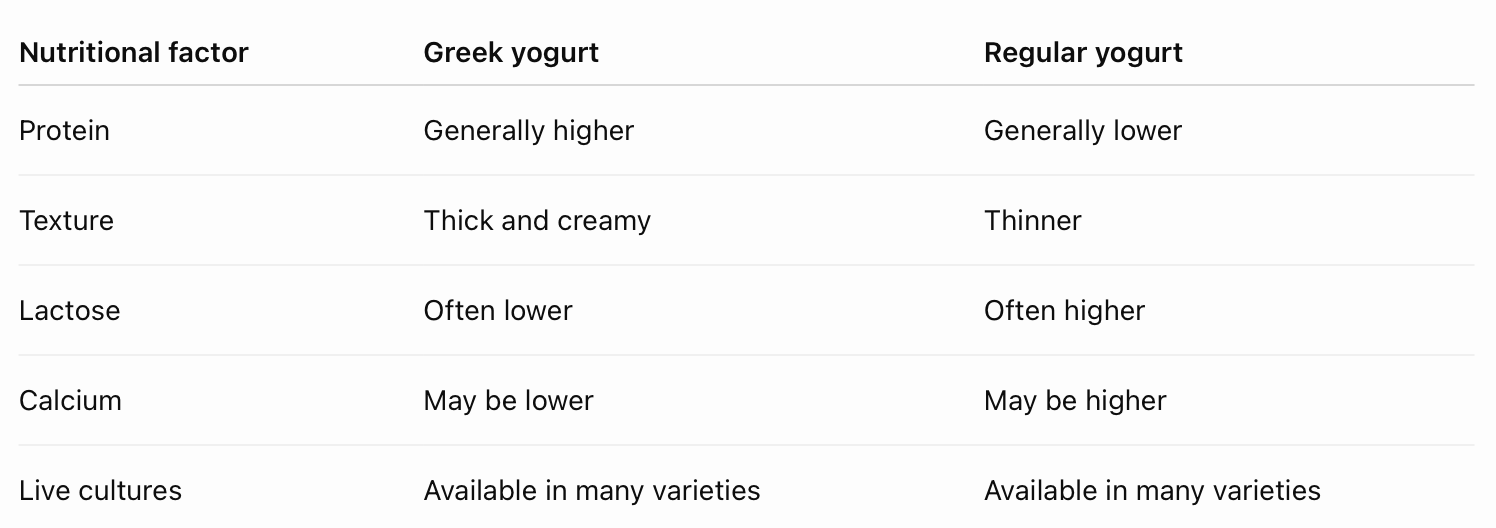
The best choice depends on your nutritional priorities, dietary preferences, and individual tolerance.
How Do You Choose the Healthiest Greek Yogurt?
The healthiest Greek yogurt for you is one that aligns with your nutritional needs and preferences.
When shopping, consider four factors.
1. Protein content
Compare the grams of protein per serving. Many Greek yogurts provide approximately 15–20 grams, although amounts vary.
2. Added sugar
Plain Greek yogurt typically contains no added sugar, while flavored varieties may contain substantially more. Check the Nutrition Facts label.
3. Live and active cultures
Look for live cultures if digestive health is one of your priorities.
4. Fat content
Greek yogurt is available in nonfat, low-fat, and whole-milk varieties. Your ideal choice depends on your overall eating pattern, preferences, and health goals.
There is no single Greek yogurt that is best for everyone.
Easy Greek Yogurt Snack: Berry and Walnut Bowl
For a simple, satisfying snack, combine:
Ingredients
¾ cup plain Greek yogurt
½ cup fresh berries
1 tablespoon chopped walnuts
A sprinkle of cinnamon
Instructions
Add Greek yogurt to a bowl, top with berries and walnuts, and finish with cinnamon.
This snack combines protein, fiber-containing fruit, and healthy fats, making it a convenient option for breakfast or between meals.
Frequently Asked Questions About Greek Yogurt
Is it healthy to eat Greek yogurt every day?
Yes. For most people who tolerate dairy, Greek yogurt can be part of a healthy daily eating pattern. Choose a variety that fits your nutritional needs and include other foods to maintain dietary variety.
Is Greek yogurt good for weight loss?
Greek yogurt may support weight-management efforts because its protein content can help promote fullness. However, no single food guarantees weight loss.
Is Greek yogurt good for gut health?
Greek yogurt containing appropriate live cultures may support digestive health. Benefits depend on the bacterial strains present and individual factors.
Does Greek yogurt have more protein than eggs?
A serving of Greek yogurt containing 15–20 grams of protein generally provides more protein than one large egg, which contains approximately 6 grams. Serving size matters when comparing foods.
Is Greek yogurt good for people with lactose intolerance?
Some individuals tolerate Greek yogurt better than regular yogurt because it often contains less lactose. However, it is not necessarily lactose-free.
Is plain Greek yogurt better than flavored Greek yogurt?
Plain Greek yogurt typically has no added sugar, making it a useful option for people who want to control added sugar intake. Flavored varieties can also fit into a balanced eating pattern.
Is Greek yogurt a good breakfast?
Yes. Greek yogurt provides protein and pairs well with fruit, nuts, seeds, and whole grains to create a more complete breakfast.
The Bottom Line: Should You Eat More Greek Yogurt?
Greek yogurt is a convenient, nutrient-rich food that can contribute protein, bone-supporting nutrients, and live cultures to your diet.
Its versatility makes it easy to include in breakfast, snacks, and meals.
The key is choosing a product that meets your individual nutritional needs rather than assuming one variety is best for everyone.
Get Personalized Nutrition Guidance From Compass Nutrition
At Compass Nutrition, our registered dietitians provide individualized, evidence-informed medical nutrition therapy to help patients build sustainable eating habits.
Whether your goals involve weight management, improving dietary protein intake, or addressing digestive concerns, personalized nutrition counseling can help you make informed choices.
Compass Nutrition offers virtual nutrition counseling, with insurance coverage available depending on your plan and eligibility.
Explore Weight Management Nutrition Counseling
This article is intended for educational purposes and is not a substitute for individualized medical or nutrition advice.